



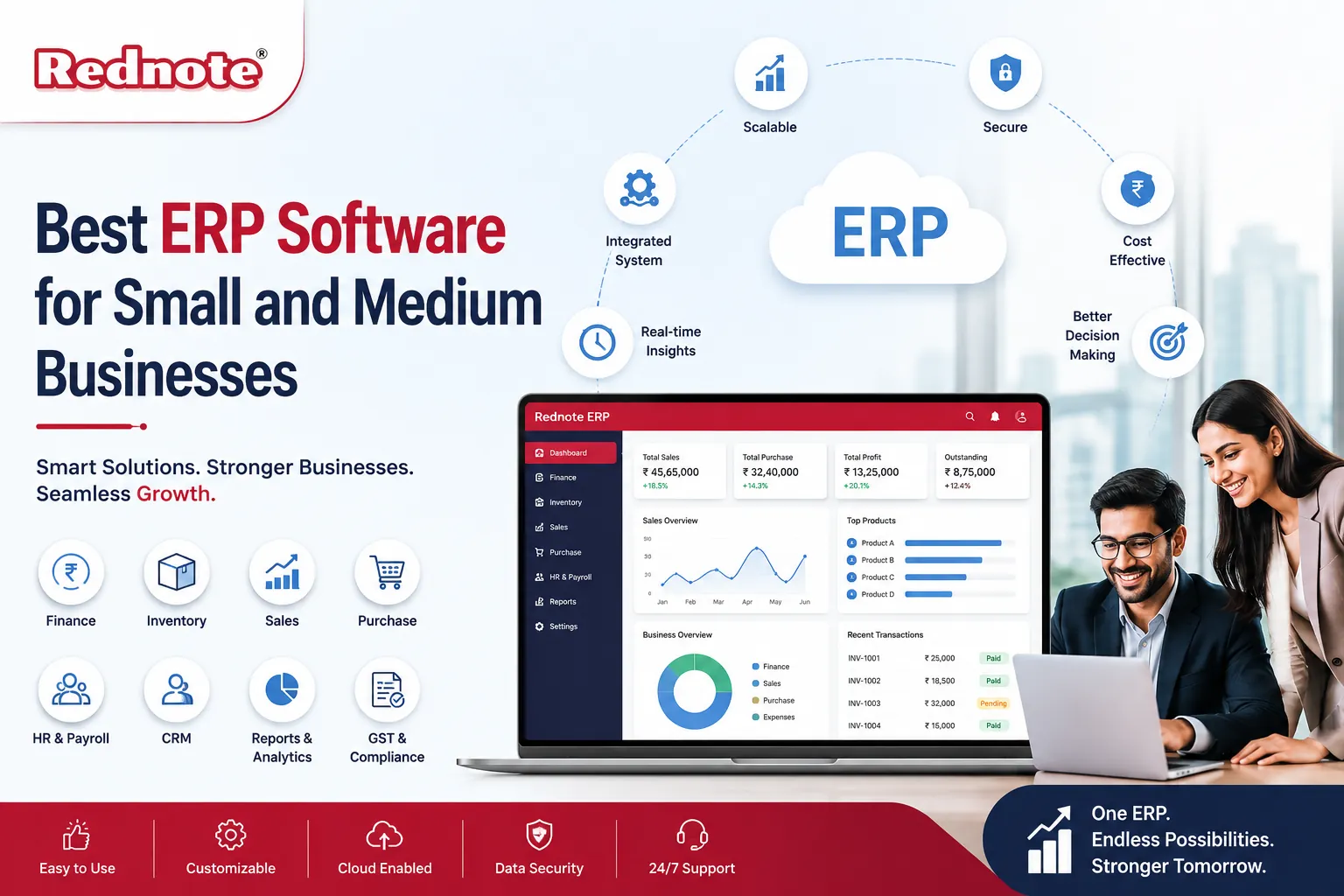
Best ERP Software for Small and Medium Businesses
Running a growing business is exciting, but it also brings new operational challenges. As sales increase, managing inventory, finance, purchasing, production, customer relationships, and reporting across multiple systems can become difficult. This is where the Best ERP Software for Small and Medium Businesses can make a meaningful difference.
An Enterprise Resource Planning (ERP) system connects critical business functions into one centralized platform, helping organizations improve efficiency, reduce manual work, and make informed decisions using real-time information.
In this guide, you'll learn what ERP software does, the features that matter most, how to evaluate solutions, common mistakes to avoid, and practical tips for choosing software that supports long-term business growth.
Why Businesses Need an ERP System
Many organizations begin with spreadsheets and separate software for accounting, inventory, and sales. While this may work initially, disconnected systems often create duplicate data, reporting delays, and unnecessary manual work.
Modern ERP software for small business helps consolidate daily operations into a single platform where departments can work together using consistent and accurate information.
Some of the biggest advantages include:
- Centralized business data
- Improved operational visibility
- Faster financial reporting
- Better inventory control
- Streamlined purchasing processes
- Enhanced customer service
- Improved compliance and audit readiness
Instead of switching between multiple applications, employees can access the information they need from one integrated system.
Features to Look for Before Choosing an ERP
Not every ERP solution is designed for growing companies. Selecting software should be based on business requirements rather than the number of available features.
Important capabilities include:
| Feature | Business Benefit |
|---|---|
| Financial Management | Accurate Accounting and Reporting |
| Inventory Control | Better Stock Visibility |
| Sales & CRM | Improved Customer Management |
| Purchasing | Simplified Procurement |
| Production Planning | Efficient Manufacturing Workflows |
| Business Analytics | Real-Time Dashboards and Insights |
| User Permissions | Better Security and Data Protection |
| Mobile Access | Work from Anywhere |
Businesses evaluating the Best ERP software for SMEs should prioritize usability, scalability, vendor support, and integration capabilities instead of selecting software with unnecessary complexity.
Cloud ERP vs Traditional ERP
Deployment model plays an important role in implementation costs and ongoing maintenance.
Many organizations now prefer Cloud ERP software for SMEs because it offers flexibility without requiring expensive on-premise infrastructure.
Typical benefits include:
- Lower upfront investment
- Automatic software updates
- Remote accessibility
- Improved data backup
- Faster deployment
- Easier business expansion
Traditional ERP systems may still suit organizations with highly specialized compliance or infrastructure requirements, but cloud-based solutions often provide better value for growing businesses.
How ERP Improves Daily Business Operations
ERP software impacts almost every department within an organization.
For example, when a customer places an order, inventory is updated automatically, finance receives billing information, purchasing can monitor stock levels, and management gains visibility through dashboards all without duplicate data entry.
Reliable ERP solutions for small businesses also improve collaboration by giving every department access to the same real-time information.
Common operational improvements include:
- Reduced manual errors
- Faster order processing
- Better production scheduling
- Improved financial forecasting
- More accurate business reporting
- Increased employee productivity
These improvements help management focus on strategic growth instead of routine administrative work.
Common Mistakes to Avoid During ERP Selection
Choosing ERP software is a long-term business decision, and rushing the evaluation process can create unnecessary challenges.
Avoid these common mistakes:
- Selecting software based only on price
- Ignoring future business growth
- Overlooking employee training
- Failing to define implementation goals
- Choosing a system without industry expertise
- Skipping vendor support evaluation
- Not involving department managers during selection
Although many businesses search for Affordable ERP software, the lowest-cost option may not deliver the functionality, scalability, or support required for sustainable growth. Consider the total value, implementation quality, and long-term return on investment before making a decision.
Practical Tips for Choosing the Right ERP
A structured evaluation process helps reduce implementation risks.
Follow these recommendations:
- Document your business processes.
- Identify operational challenges.
- Create a list of essential features.
- Request product demonstrations.
- Compare implementation timelines.
- Evaluate customer support quality.
- Consider future scalability.
- Check security and compliance capabilities.
- Review customer success stories.
- Plan employee training before deployment.
A successful ERP implementation is not just about software—it also depends on planning, user adoption, and continuous improvement.
Internal Linking Opportunities
- Manufacturing ERP Software
- ERP Implementation Guide
- Inventory Management Software
- CRM Integration Benefits
- Business Process Automation
- Financial Management Solutions
- Supply Chain Management
- Cloud Business Software
Conclusion
Selecting the right ERP platform can transform how a business operates by improving visibility, streamlining workflows, and supporting informed decision-making. Rather than focusing only on features or pricing, businesses should evaluate scalability, ease of use, implementation support, and long-term business value.
The right ERP solution should align with your operational goals today while remaining flexible enough to support future growth. Taking time to assess business requirements, involve stakeholders, and plan implementation carefully will help maximize your investment and ensure lasting success.
Frequently Asked Questions