



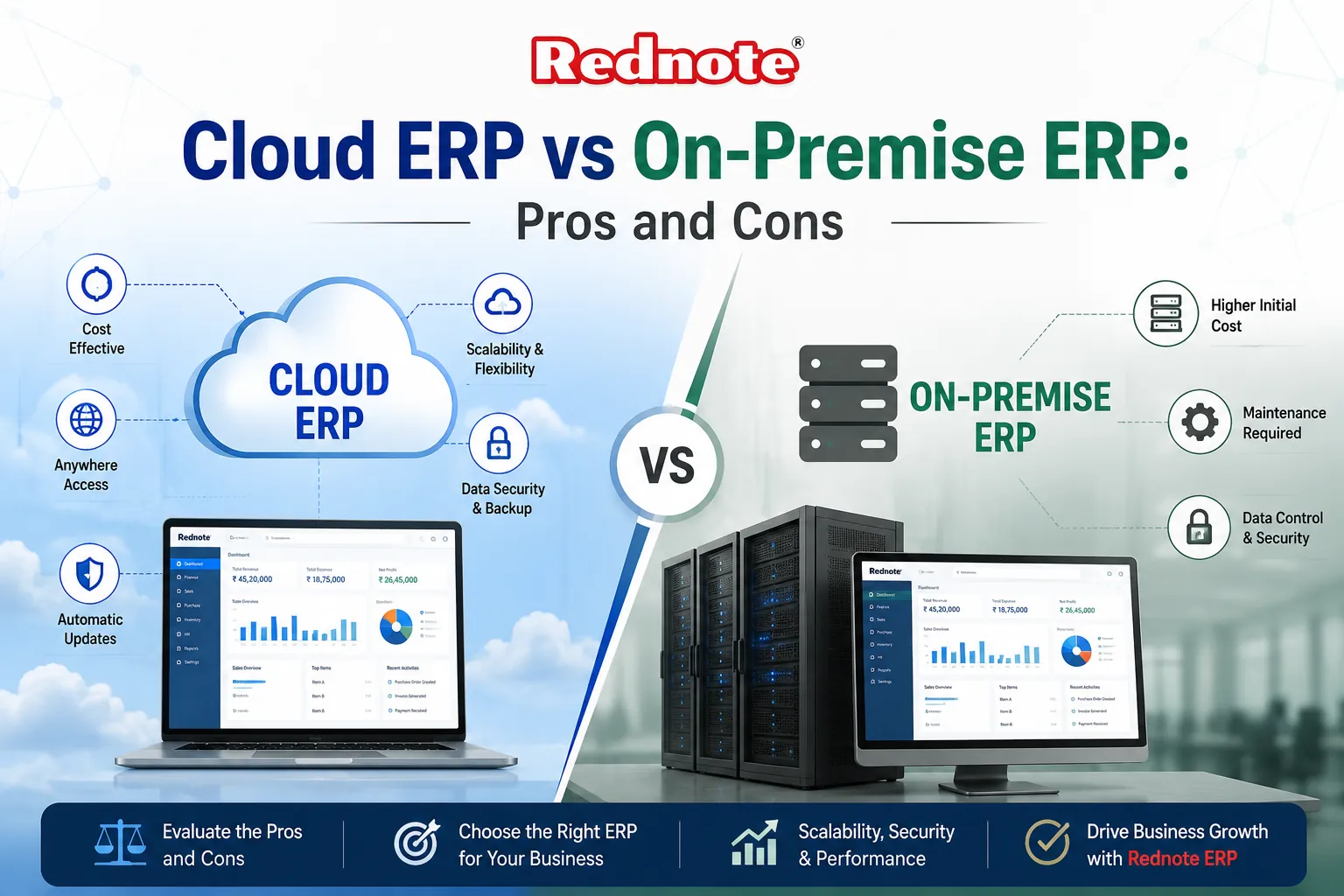
Cloud ERP vs On-Premise ERP: Pros and Cons
Choosing the right ERP system is one of the most important technology decisions a business can make. The platform you select will influence how your teams manage finance, inventory, manufacturing, purchasing, customer relationships, and daily operations for years to come.
Many organizations compare Cloud ERP vs On-Premise ERP before making an investment. While both options aim to streamline business processes, they differ in deployment, ownership, maintenance, scalability, and long-term costs.
This guide explains the strengths and limitations of each approach, highlights important decision factors, and helps you determine which solution best fits your business goals. Whether you're replacing a legacy system or implementing ERP for the first time, you'll find practical insights to support a confident decision.
Understanding Modern ERP Deployment Models
Enterprise Resource Planning software integrates business functions into a single platform that improves visibility, collaboration, and operational efficiency.
Today's businesses generally choose between two deployment methods.
A system hosted by the software provider and accessed through the internet offers flexibility and simplified management. This approach is commonly known as Cloud ERP.
Alternatively, companies can install and manage the software on their own servers and infrastructure. This deployment model is referred to as On-Premise ERP.
Both options can deliver strong business value, but each serves different operational priorities.
Key Differences You Should Evaluate
Before comparing costs or features, understand how this deployment models differ across the areas that matter most.
| Factor | Cloud Deployment | Local Deployment |
|---|---|---|
| Initial Investment | Lower Upfront Cost | Higher Capital Investment |
| Monthly Costs | Subscription-Based | Maintenance and Infrastructure Costs |
| Software Updates | Automatic | Manual |
| Remote Access | Available from Anywhere | Requires Secure Network Configuration |
| Scalability | Easy to Expand | Hardware Upgrades May Be Required |
| IT Management | Vendor Managed | Internal IT Team Responsible |
| Disaster Recovery | Usually Included | Organization Manages Backups |
The Difference between Cloud ERP and On-Premise ERP becomes especially important when businesses consider future growth, IT capabilities, and long-term operational strategy.
Cost Considerations Beyond the Purchase Price
Many organizations focus only on software pricing, but total ownership costs extend far beyond licensing.
Expenses often include:
- Infrastructure
- Server maintenance
- Security management
- Software upgrades
- Employee training
- Technical support
- Data backup
- Business continuity planning
Subscription-based systems reduce large upfront investments, while locally hosted solutions may require greater initial spending but offer more control over long-term infrastructure.
The best financial decision depends on company size, expected growth, and available technical resources.
Security, Compliance, and Business Continuity
Security remains one of the biggest concerns during ERP selection.
Cloud providers continuously invest in cybersecurity technologies, encrypted data transmission, monitoring, backup automation, and redundancy. Many vendors also maintain internationally recognized compliance certifications.
Organizations operating in highly regulated industries may still prefer managing sensitive information internally because it provides complete control over hardware, access policies, and security procedures.
Rather than assuming one deployment is automatically safer, evaluate:
- Regulatory requirements
- Data residency policies
- Internal cybersecurity expertise
- Recovery objectives
- Vendor security certifications
Strong security depends more on implementation and governance than deployment location.
Which Businesses Benefit Most from Each Option?
No ERP deployment is universally better. Smaller and growing organizations often appreciate the flexibility, lower infrastructure requirements, and simplified maintenance associated with hosted solutions. These represent important Cloud ERP benefits for businesses that want predictable operating expenses and rapid deployment.
Larger enterprises with dedicated IT teams, specialized integrations, or strict compliance requirements may value complete infrastructure ownership and system customization. These are among the primary On-Premise ERP advantages that continue to make local deployment attractive in specific industries.
Consider questions such as:
- How quickly will the company grow?
- Is remote work common?
- Does the business have an experienced IT department?
- How much customization is required?
- What compliance standards apply?
Your answers provide a clearer direction than focusing on deployment trends alone.
Common Mistakes Businesses Make
ERP implementation failures rarely occur because of the deployment model itself.
Instead, organizations often make avoidable planning mistakes.
Common examples include:
- Selecting software without defining business objectives.
- Ignoring employee training requirements.
- Underestimating data migration complexity.
- Focusing only on purchase price.
- Choosing technology that cannot support future growth.
- Skipping stakeholder involvement during evaluation.
- Failing to measure implementation success.
A structured selection process significantly improves project outcomes regardless of deployment type.
Practical Checklist Before Making Your Decision
Before investing in any ERP platform, evaluate the following areas.
- Define your business goals.
- Estimate five-year ownership costs.
- Review vendor implementation experience.
- Verify security certifications.
- Assess integration capabilities.
- Plan employee training.
- Evaluate future scalability.
- Request product demonstrations.
- Speak with existing customers.
- Build a phased implementation roadmap.
A thorough evaluation reduces project risks and helps ensure long-term business value.
Conclusion
Selecting the right ERP deployment is a strategic business decision rather than simply a technology purchase. Every organization has different operational needs, regulatory requirements, growth plans, and available resources.
Carefully compare infrastructure costs, security responsibilities, scalability, maintenance requirements, customization needs, and long-term ownership before making your investment. Involving business leaders, IT teams, and end users throughout the evaluation process will lead to better implementation outcomes and stronger long-term value.
If you're evaluating ERP solutions, create a detailed requirements checklist, compare multiple vendors, and request demonstrations that reflect your real business workflows before making a final decision.
Frequently Asked Questions