



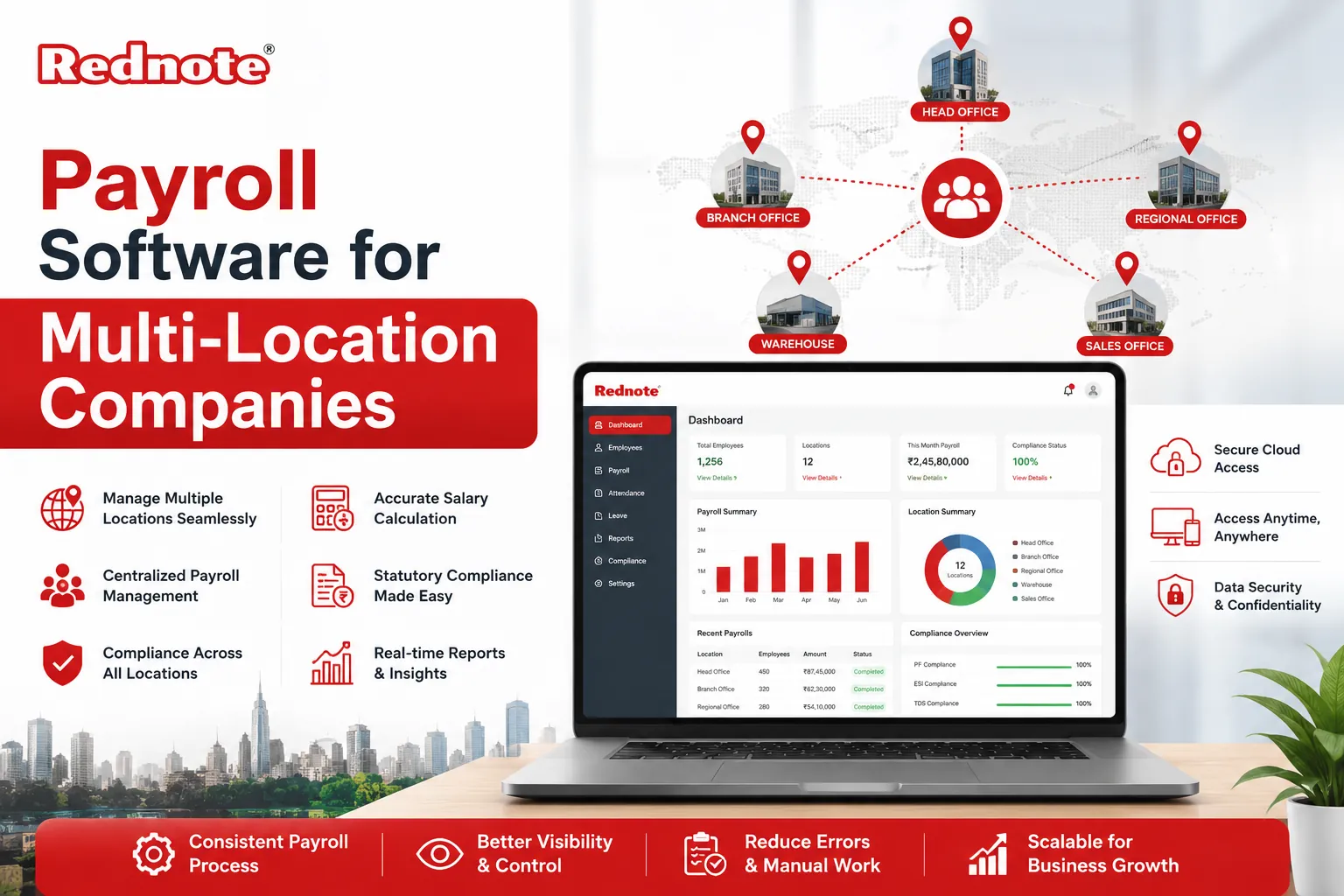
Payroll Software for Multi-Location Companies
Expanding into multiple cities or states is an exciting milestone, but it also introduces new payroll challenges. Different work schedules, regional compliance requirements, employee records, and salary structures can quickly become difficult to manage using spreadsheets or disconnected systems.
A modern Payroll Software for Multi-Location Companies helps businesses centralize payroll operations while maintaining location-specific compliance and employee data. Whether your organization operates retail stores, manufacturing plants, warehouses, corporate offices, or franchises, the right payroll solution streamlines salary processing and reduces administrative workload.
In this guide, you'll learn what ERP software does, the features that matter most, how to evaluate solutions, common mistakes to avoid, and practical tips for choosing software that supports long-term business growth.
Why Multi-Location Payroll Becomes Challenging
As businesses expand, payroll complexity increases significantly. Each branch may have different attendance policies, work shifts, overtime calculations, holidays, or statutory requirements.
Without a centralized system, HR teams often struggle with:
- Duplicate employee records
- Manual payroll calculations
- Inconsistent salary processing
- Compliance tracking across locations
- Delayed approvals
- Reporting inconsistencies
Using multi-location payroll software enables HR and finance teams to process payroll from a single dashboard while maintaining branch-specific configurations where necessary.
Essential Features to Look For
Selecting the right payroll platform requires more than simply automating salary calculations. Businesses should evaluate whether the software can support long-term operational growth.
Important capabilities include:
- Centralized employee database
- Branch-wise payroll processing
- Custom salary structures
- Attendance and leave integration
- Automated tax calculations
- Compliance monitoring
- Role-based user permissions
- Detailed payroll reports
- Employee self-service portal
- Secure cloud accessibility
Organizations that operate across multiple offices often prefer Multi branch payroll software because it allows HR teams to maintain consistent payroll policies while accommodating location-specific rules.
Benefits of a Centralized Payroll Approach
A centralized payroll system improves operational efficiency while giving leadership greater visibility into workforce costs.
Some key advantages include:
| Benefit | Business Impact |
|---|---|
| Faster Payroll Processing | Reduces Monthly Administrative Effort |
| Improved Accuracy | Minimizes Salary Calculation Errors |
| Better Compliance | Supports Statutory Reporting Requirements |
| Centralized Reporting | Enables Informed Business Decisions |
| Secure Employee Records | Protects Sensitive Payroll Information |
| Easier Scalability | Supports Business Expansion Without Increasing Manual Work |
Businesses implementing Payroll management software typically experience reduced payroll errors and better collaboration between HR, finance, and management teams.
Practical Example
Imagine a manufacturing company with offices in Chennai, Bengaluru, Hyderabad, and Coimbatore.
Each location follows different shift timings, overtime policies, and attendance rules. Processing payroll separately every month requires multiple spreadsheets and manual verification.
A centralized payroll platform automatically collects attendance data, calculates salaries, applies location-specific rules, and generates reports for management from one dashboard. This reduces processing time while improving consistency across every branch.
Common Mistakes Businesses Should Avoid
Many organizations invest in payroll automation without evaluating future requirements.
Common mistakes include:
- Choosing software that cannot support multiple branches
- Ignoring integration with attendance systems
- Overlooking compliance updates
- Limiting reporting capabilities
- Failing to train HR teams
- Migrating inaccurate employee data
Planning implementation carefully helps avoid unnecessary disruptions and ensures smoother adoption.
How to Choose the Right Solution
Every organization has unique payroll requirements, so selecting software should begin with understanding operational needs rather than comparing feature lists alone.
Before making a decision, consider:
- Number of business locations
- Employee strength
- Payroll frequency
- Compliance requirements
- Integration with HR systems
- Cloud accessibility
- Data security standards
- Vendor support quality
- Scalability for future expansion
Many growing businesses evaluate Payroll software India because these platforms are designed to support local payroll regulations, taxation, and statutory compliance while remaining scalable for expanding organizations.
Companies looking for complete workforce management often prefer HR and payroll software since it combines employee records, attendance, leave management, onboarding, and payroll processing within a single platform, reducing administrative complexity.
Conclusion
Managing payroll across multiple business locations no longer needs to involve manual spreadsheets, disconnected systems, or repetitive administrative work. A centralized payroll solution improves accuracy, simplifies compliance, enhances reporting, and supports sustainable business growth. Choosing software that aligns with your current operations while accommodating future expansion helps organizations build a more efficient and reliable payroll process.
Frequently Asked Questions