



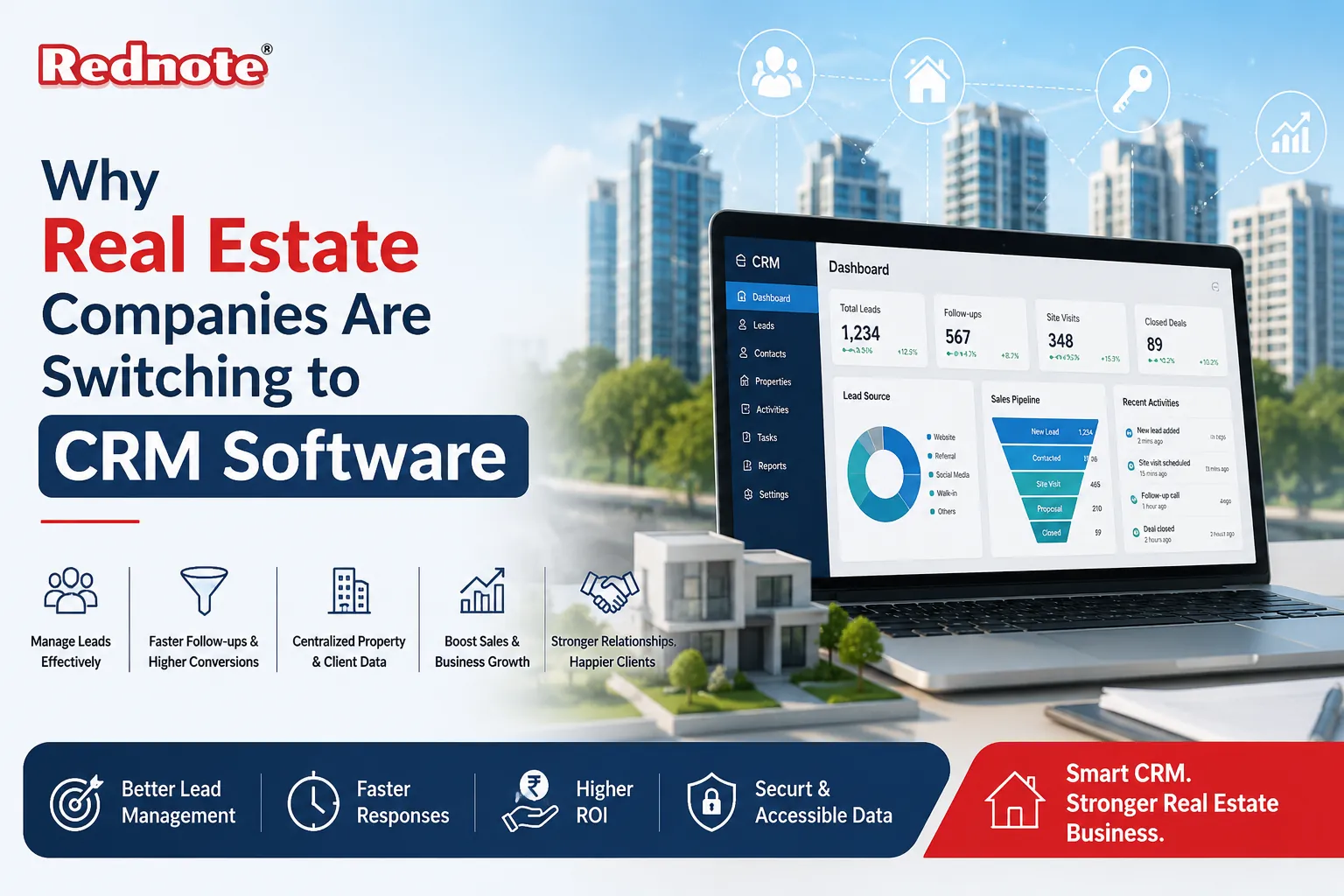
Why Real Estate Companies Are Switching to CRM Software
The real estate industry has changed dramatically over the past few years. Buyers and sellers now expect faster responses, personalized communication, and seamless experiences throughout their property journey. At the same time, agencies are handling more inquiries from websites, social media, property portals, and referrals than ever before. Managing all of these interactions manually is becoming increasingly difficult.
This shift is one of the biggest reasons businesses are investing in Real Estate CRM Software. Instead of relying on spreadsheets, notebooks, or disconnected applications, agencies can organize client information, automate repetitive tasks, and monitor every stage of the sales process from one centralized platform.
Whether you're a growing brokerage or an established agency, adopting the right technology can improve productivity, reduce missed opportunities, and create better experiences for clients. In this guide, you'll learn why more real estate companies are embracing CRM solutions, the challenges they solve, and the practical benefits they bring to daily operations.
The Changing Expectations of Modern Property Buyers
Today's customers expect quick responses and personalized service. Most property searches begin online, and potential buyers often contact multiple agencies before making a decision. If an inquiry isn't answered promptly, prospects can easily move to another company.
Modern buyers also prefer communication across multiple channels, including email, phone calls, messaging apps, and social media. Keeping track of every interaction without a centralized system becomes challenging as lead volumes increase.
A digital platform helps agents maintain a complete history of conversations, appointments, documents, and follow-up activities. This makes it easier to understand customer preferences and provide consistent service regardless of which team member is handling the client.
For example, if a buyer initially inquiries about apartments but later expresses interest in villas, the updated preference remains available to everyone in the organization. This continuity improves customer satisfaction and reduces communication gaps.
Why Traditional Lead Management No Longer Works
Many agencies still depend on spreadsheets or manual record-keeping to manage prospects. While this approach may work for a small number of clients, it quickly becomes inefficient as the business grows.
Some common challenges include:
- Lost or duplicated lead information
- Missed follow-up reminders
- Difficulty assigning leads to agents
- Inconsistent communication
- Limited visibility into sales performance
- Time-consuming manual reporting
As the number of inquiries increases, these issues directly affect conversion rates and customer experience.
Businesses looking to improve their sales process are increasingly adopting CRM for Real Estate because it centralizes customer information while simplifying everyday operations. Instead of searching through emails or spreadsheets, agents can instantly access lead details, conversation history, scheduled meetings, and property preferences.
How CRM Technology Improves Daily Operations
One of the biggest advantages of adopting a CRM solution is operational efficiency. Rather than spending valuable time on administrative work, agents can focus on building relationships and closing deals.
A well-designed platform simplifies several daily activities, including:
| Business Activity | Traditional Process | CRM-Based Process |
|---|---|---|
| Lead Collection | Manual Entry | Automatic Capture |
| Follow-ups | Personal Reminders | Scheduled Automation |
| Client Records | Multiple Files | Centralized Database |
| Property Matching | Manual Search | Smart Filtering |
| Sales Tracking | Spreadsheet Updates | Real-Time Dashboard |
| Reporting | Manual Compilation | Automated Reports |
This streamlined workflow reduces repetitive work while ensuring that important tasks are completed on time.
Another major benefit is improved collaboration. Sales managers can assign leads, monitor progress, and identify bottlenecks without constantly requesting status updates from agents.
Better Customer Relationships Through Personalized Communication
Real estate transactions often involve weeks or months of communication before a purchase decision is made. During this period, personalized engagement plays a significant role in building trust.
Instead of sending generic messages, agencies can use customer insights to provide more relevant recommendations based on:
- Budget preferences
- Preferred locations
- Property type
- Investment goals
- Previous inquiries
- Viewing history
This personalized approach becomes much easier with Real Estate Customer Relationship Management Software, which stores detailed customer profiles and interaction history in one place.
For instance, if a family is searching for homes near schools, the agent can immediately recommend suitable listings without asking the same questions repeatedly. These small improvements create a more professional experience and strengthen long-term relationships.
Automation Reduces Manual Work and Human Errors
Administrative tasks consume a significant portion of an agent's working day. Scheduling appointments, sending reminders, updating records, and tracking follow-ups can quickly become overwhelming.
Automation helps eliminate repetitive activities while maintaining consistency across the sales process.
Examples include:
- Automatic lead assignment
- Email follow-up sequences
- Appointment reminders
- Task notifications
- Pipeline updates
- Activity tracking
Instead of remembering every follow-up manually, agents receive reminders at the right time. This significantly reduces the chances of losing potential customers because of delayed responses.
Automation also improves data accuracy by reducing duplicate entries and minimizing manual mistakes.
Signs Your Real Estate Business Has Outgrown Manual Processes
Many agencies don't realize they need a CRM until operational problems become impossible to ignore.
You may be ready for a CRM solution if your business experiences:
- Increasing numbers of missed follow-ups
- Difficulty tracking lead sources
- Slow response times
- Duplicate customer records
- Poor visibility into sales performance
- Challenges managing multiple agents
- Inconsistent customer communication
These issues often become more noticeable as agencies expand into new markets or hire additional sales professionals.
Recognizing these warning signs early allows businesses to improve efficiency before customer satisfaction begins to decline.
Choosing the Right CRM for Long-Term Growth
Selecting a CRM is not simply about choosing software with the most features. The best solution is one that fits your business processes, supports your team's workflow, and can scale as your agency grows.
Before making a decision, evaluate your current challenges. Are leads getting lost? Is follow-up inconsistent? Are managers struggling to monitor sales performance? Answering these questions helps identify the features that will deliver the greatest value.
When comparing solutions, consider the following factors:
- Ease of use for agents and managers
- Mobile accessibility for field teams
- Integration with property portals and websites
- Automated workflows
- Custom reporting and dashboards
- Data security and backup
- Customer support and onboarding
- Scalability for future expansion
A CRM should simplify daily work rather than introduce unnecessary complexity. User adoption is often the biggest factor in successful implementation.
Features That Deliver the Greatest Business Value
While every agency has unique requirements, certain capabilities consistently improve productivity and customer experience.
Centralized Lead Database
Every inquiry should automatically enter one secure database, ensuring no opportunity is overlooked.
Smart Lead Assignment
Instead of manually distributing inquiries, the system can assign prospects based on location, property type, or agent availability.
Sales Pipeline Visibility
Managers gain a clear overview of every opportunity, helping them identify stalled deals and forecast future revenue more accurately.
Communication Tracking
Calls, emails, meetings, and notes remain attached to each customer profile, giving every team member complete context before reaching out.
Task Automation
Routine activities such as reminders, follow-up emails, and appointment scheduling happen automatically, allowing agents to focus on building relationships.
Performance Analytics
Detailed reports help agencies understand:
- Lead conversion rates
- Response times
- Agent productivity
- Marketing effectiveness
- Revenue performance
These insights support better business decisions and continuous improvement.
Supporting Business Growth with Smarter Lead Management
As agencies expand, handling hundreds or even thousands of inquiries manually become increasingly difficult. Growth depends on responding quickly, qualifying prospects effectively, and ensuring every opportunity receives attention.
This is where Real Estate Lead Management Software becomes valuable. Rather than allowing inquiries to sit unattended, it organizes prospects into structured pipelines, prioritizes follow-up activities, and helps agents focus on the most promising opportunities.
For example, imagine two agencies receive the same number of monthly inquiries. One relies on spreadsheets, while the other uses an automated lead management system. Even if both attract equal traffic, the agency with organized processes is more likely to respond faster, maintain consistent communication, and convert more prospects into customers.
Over time, these operational improvements can significantly influence overall business performance.
Common Mistakes Companies Make During CRM Implementation
Purchasing software alone does not guarantee better results. Successful implementation requires planning, training, and consistent usage across the organization.
Choosing Features Over Usability
A platform with hundreds of features may appear attractive, but if employees struggle to use it, productivity can decline instead of improving.
Migrating Poor-Quality Data
Duplicate contacts, incomplete records, and outdated customer information reduce the effectiveness of any CRM. Cleaning existing data before migration saves time later.
Ignoring Employee Training
Even the most advanced technology delivers limited value if employees don't understand how to use it effectively. Regular training sessions improve adoption and confidence.
Failing to Define Processes
Before implementation, agencies should establish clear workflows for lead assignment, follow-ups, reporting, and customer communication.
Not Reviewing Performance
CRM adoption should be measured regularly. Monitoring response times, conversion rates, and sales performance helps identify opportunities for improvement.
The Future of Real Estate Technology
Digital transformation continues to reshape the property industry. CRM platforms are becoming more intelligent by combining automation, analytics, and artificial intelligence to help agencies work more efficiently.
Future innovations are expected to include:
- Predictive lead scoring
- AI-assisted customer communication
- Intelligent property recommendations
- Automated document workflows
- Enhanced sales forecasting
- Deeper marketing integrations
These developments will allow agencies to spend less time on administrative work and more time delivering value to customers.
Organizations evaluating the Best CRM Software for Real Estate Companies should look beyond today's requirements and choose solutions capable of supporting future business growth.
Similarly, agencies managing rental properties or large real estate portfolios may benefit from Property Management CRM Software, which brings customer interactions, property information, maintenance coordination, and operational workflows into a unified system.
Conclusion
The real estate industry is becoming increasingly competitive, making speed, organization, and customer experience more important than ever. Agencies that continue relying on manual processes often struggle with missed follow-ups, scattered customer information, and limited visibility into sales performance.
A modern CRM provides a structured way to manage leads, improve communication, automate repetitive tasks, and support better decision-making across the business. More importantly, it helps agents spend less time on administration and more time building meaningful relationships with buyers and sellers.
Adopting the right CRM is not simply a technology upgrade—it is an investment in long-term efficiency, stronger customer engagement, and sustainable business growth. By evaluating your current processes, selecting a solution that matches your needs, and ensuring proper team adoption, your agency can create a more organized and scalable foundation for future success.
Frequently Asked Questions