



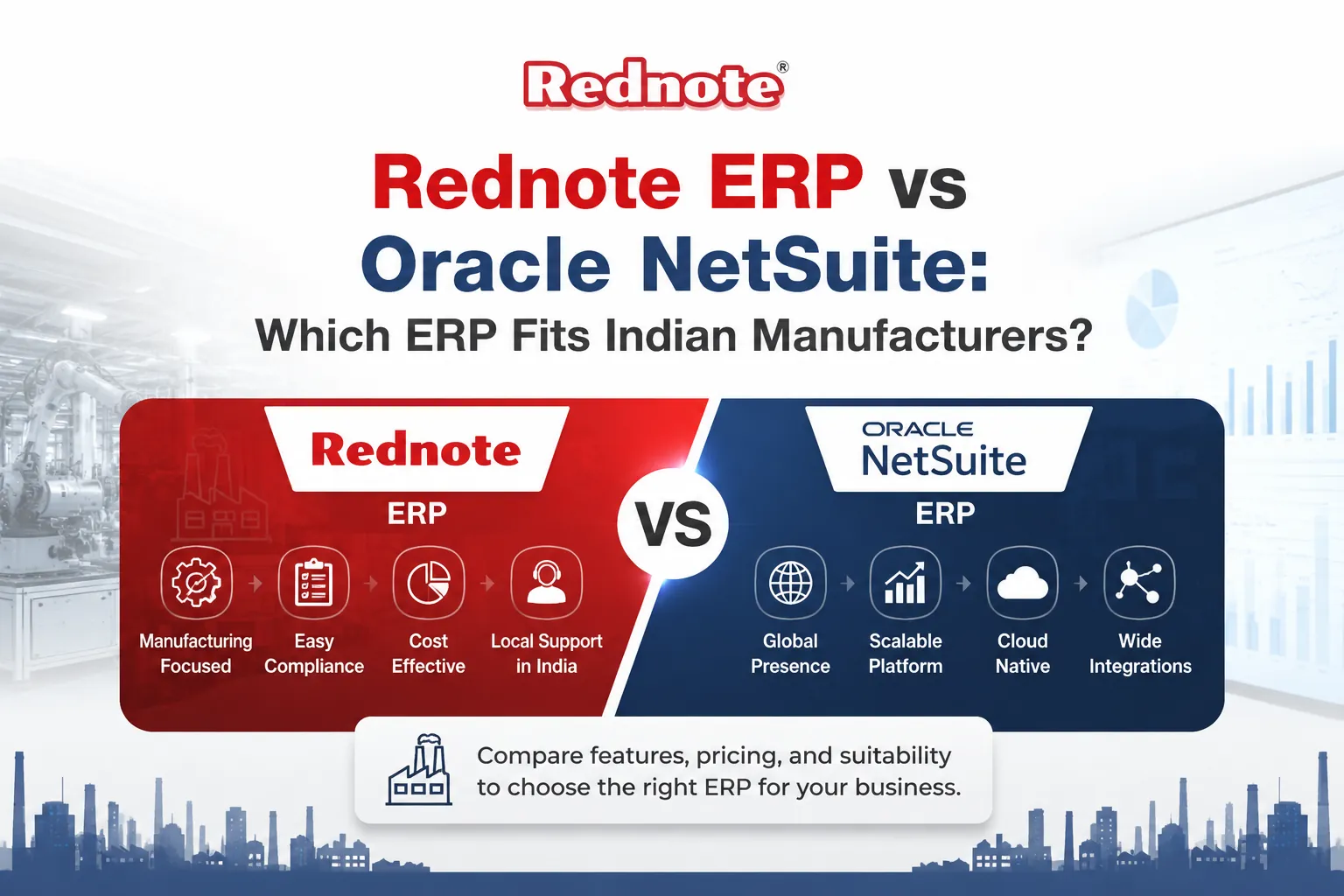
Rednote ERP vs Oracle NetSuite: Which ERP Fits Indian Manufacturers?
Are you running a production plant in Chennai and struggling to manage inventory and GST filings? Maybe your supply chain is a mess too. You aren't alone. Moving to a modern system is the smartest step a growing factory can take. But picking the right software is a headache. If you're currently evaluating platforms, the Rednote ERP vs Oracle NetSuite decision is likely at the top of your list. Both are capable tools. They just serve totally different types of businesses. Pricing and core features matter. Real-world use cases also help you pick the right digital backbone for your shop floor.
Why upgrading your operations matters
Relying on outdated desktop tools or scattered spreadsheets leads to stockouts and delayed shipments. You also run into major compliance headaches.
A dedicated manufacturing platform bolts your raw material procurement directly to your accounting and sales teams.
Deep dive: Rednote manufacturing ERP review
Located right here in Chennai (Velachery, to be exact), Rednote was built from the ground up for Indian businesses. It's a highly specialized, localized tool.
The builders clearly focused on domestic compliance and everyday operational ease.
Key strengths:
- Hyper-localized compliance: It natively supports Indian GST returns and e-Way bills. It handles e-Invoicing right out of the box too. That saves your accounting team hours of manual work.
- Cost-effective: Plans start at highly affordable monthly rates per user. You won't need massive upfront capital or hardware.
- Built for the factory: It includes Material Requirements Planning (MRP) and unlimited Bill of Materials (BOM). You also get quality control checklists.
Limitations:
- It lacks the deep, multi-national financial consolidation tools a massive enterprise needs if they operate across a dozen different countries and currencies.
Oracle NetSuite: the global heavyweight
NetSuite practically invented the cloud-based resource management space. It's an absolute powerhouse.
Oracle designed it to run complex, global organizations.
Key strengths:
- Infinite scalability: Whether you have 50 employees or 5,000, the platform grows with your headcount.
- Advanced analytics: The real-time dashboards and business intelligence tools are industry-leading. They give you granular insights into every department.
- Global reach: Perfect for managing multiple currencies and languages. It deals with international tax laws without breaking a sweat.
Limitations:
- The sticker shock can be real for smaller firms. Implementation usually takes several months and requires specialized consultants. Standard users also face a steep learning curve.
NetSuite vs Rednote comparison: head-to-head
Best ERP for Indian manufacturers: how to decide
| Feature | Rednote | Oracle NetSuite |
|---|---|---|
| Target Audience | SMBs and Mid-Market Indian Firms | Large Enterprises and Global Corporations |
| Pricing Strategy | Highly Affordable, Per-User Pricing | Premium Enterprise-Level Pricing |
| GST Compliance | Built-in Natively | Requires Custom Localization Suites |
| Implementation | Days to a Few Weeks | Several Months |
| Ease of Use | Simple, Easy for Beginners | Complex, Requires Dedicated Training |
The short answer: If you're a small to medium-sized manufacturer operating primarily within India (for example, managing auto parts production in Chennai's Ambattur Industrial Estate), Rednote is a fantastic choice.
It gives you everything you need, like MRP and automated GST filing. You skip the massive enterprise price tag.
But if you're a massive multinational corporation managing subsidiaries across Asia and Europe, NetSuite is the necessary choice to handle that level of global complexity.
Frequently Asked Questions