



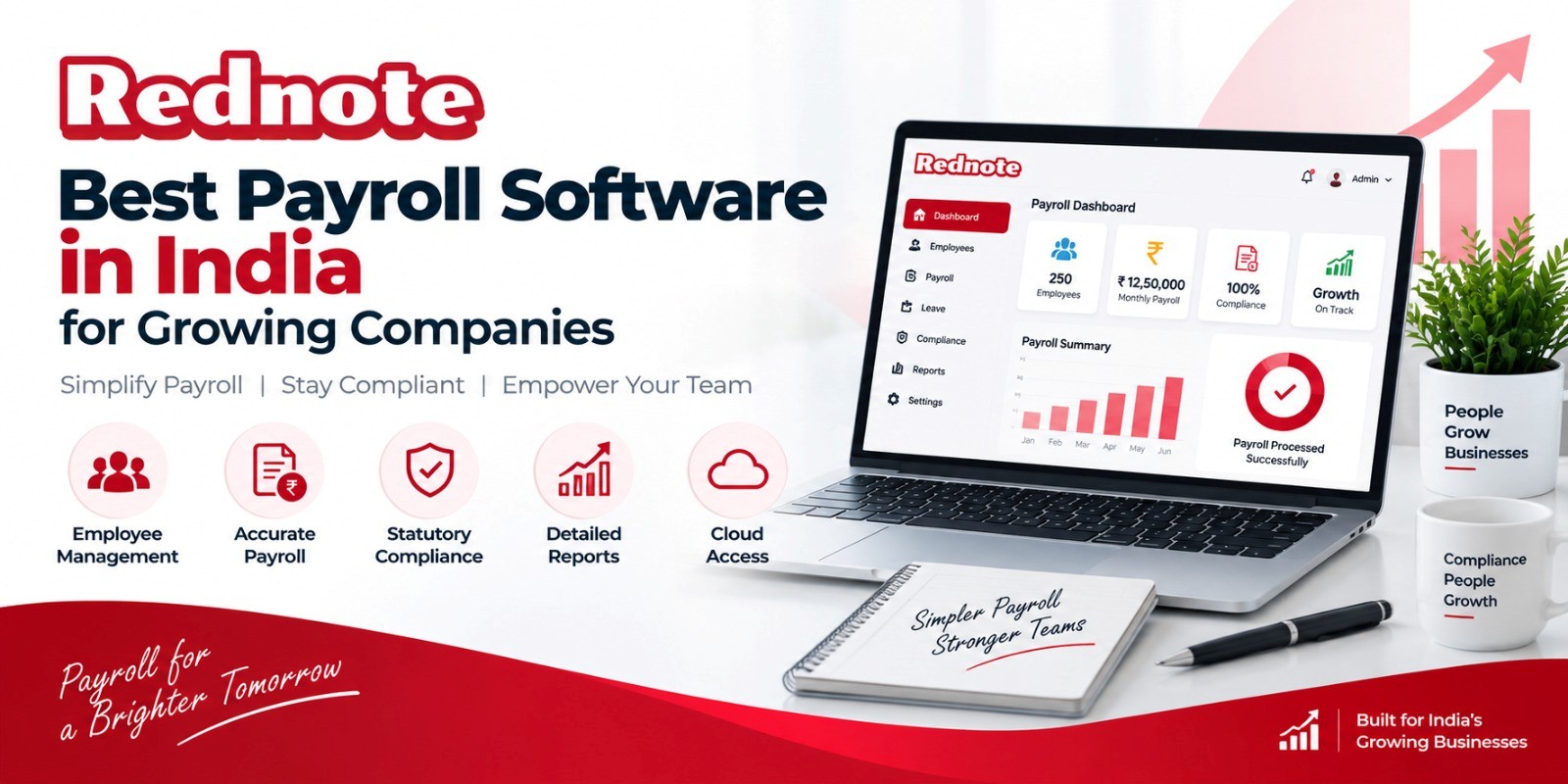
Best Payroll Software in India for Growing Companies
As a company grows, payroll becomes more than simply calculating salaries at the end of every month. Employee attendance, leave, overtime, deductions, reimbursements, payslips, compliance records, and salary processing all need to be handled accurately and on time.
For a growing company, managing these activities manually can take significant time and create unnecessary administrative work. This is why many businesses are moving toward payroll software in India to simplify salary processing and maintain employee records in one place.
The right payroll system can help HR and finance teams automate repetitive tasks, reduce calculation errors, and provide employees with easier access to their payroll information.
What Is Payroll Software?
Payroll software is a digital system used to manage employee salary and payroll-related activities. Depending on the platform, it can handle salary calculations, attendance, leave, deductions, reimbursements, payslips, payroll reports, and statutory requirements.
Modern payroll management software can also integrate with HR and attendance systems. This allows information such as working days, leave, overtime, and employee details to flow into the payroll process without requiring repeated manual entry.
For growing companies, this integrated approach can make monthly payroll processing more structured and manageable.
Why Growing Companies Need Payroll Software
When a company has only a few employees, payroll can often be managed through spreadsheets. But as employee numbers increase, payroll becomes more complicated.
HR teams may need to manage:
- Employee salary structures
- Attendance and working days
- Leave deductions
- Overtime
- Bonuses and incentives
- Reimbursements
- Salary deductions
- Payslips
- Payroll reports
- Employee records
- Statutory compliance
Using spreadsheets for all these activities can increase the amount of manual work involved.
Payroll software for growing companies provides a centralized system where HR and finance teams can manage these processes more efficiently.
Key Benefits of Payroll Software in India
1. Automated Salary Calculation
One of the main benefits of payroll software is automated salary calculation.
Instead of manually calculating every employee's salary, the system can use configured salary structures, attendance data, leave records, deductions, and other relevant information.
This can reduce repetitive calculations and help HR teams complete payroll processing more efficiently.
2. Better Attendance and Leave Integration
Attendance and leave information directly affects payroll.
For example, an employee's salary calculation may depend on working days, unpaid leave, overtime, or approved leave.
With an integrated HR and payroll software, attendance and leave information can be connected with payroll. This reduces the need to manually transfer information between different spreadsheets or systems.
3. Easy Payslip Generation
Employees regularly need access to their salary information.
Payroll systems can generate digital payslips containing relevant salary details. Depending on the software, employees may also be able to access their payslips through an employee portal or mobile application.
This reduces the need for HR teams to manually prepare and send individual salary documents.
4. Improved Payroll Accuracy
Payroll mistakes can create problems for both employees and employers.
Common manual errors may involve:
- Incorrect working days
- Wrong deductions
- Salary calculation mistakes
- Missing overtime
- Incorrect employee information
- Duplicate entries
Online payroll software in India can automate many repetitive calculations and use centralized employee information, helping reduce the possibility of manual errors.
5. Centralized Employee Information
Growing businesses often have employee information spread across HR files, spreadsheets, attendance systems, and payroll records.
A centralized employee payroll management system can bring important information together.
Depending on the platform, HR teams may be able to manage employee profiles, salary structures, attendance, leave, payroll history, and related documents from one system.
Payroll Software vs Manual Payroll
| Payroll Activity | Manual Process | Payroll Software |
|---|---|---|
| Salary Calculation | Spreadsheet-based | Automated calculation |
| Attendance | Manually updated | Can be integrated |
| Leave | Separate records | Connected with payroll |
| Payslips | Manually prepared | Automated generation |
| Employee Records | Multiple files | Centralized database |
| Payroll Reports | Manually created | Automated reports |
| Data Entry | Repetitive | Reduced duplication |
| Payroll History | Difficult to track | Easily accessible |
Payroll Compliance in India
Payroll processing in India can involve different statutory requirements depending on factors such as employee salary, company structure, applicable laws, and the location or nature of the business.
A payroll platform can help businesses organize relevant payroll information and generate reports required for internal administration and applicable compliance processes.
However, businesses should not assume that software alone guarantees compliance. Payroll rules and statutory requirements can change, and companies should configure their systems correctly and review requirements with qualified HR, payroll, or tax professionals when necessary.
How Payroll Software Supports HR Teams
Payroll is closely connected to HR operations.
When HR and payroll information is managed separately, employees may need to enter or update the same information multiple times.
An integrated payroll platform can help HR teams manage:
- Employee onboarding information
- Salary structures
- Attendance
- Leave
- Payroll processing
- Payslips
- Employee documents
- Payroll reports
This can give HR teams more time to focus on recruitment, employee engagement, training, and other important responsibilities.
Features to Look for in Payroll Software
Not every payroll platform offers the same features. Growing companies should identify their requirements before selecting a solution.
Salary Management
The system should support salary structures and relevant earnings and deductions according to the company's payroll process.
Attendance Integration
Integration with attendance systems can reduce manual data entry and make salary calculations more connected to actual attendance information.
Leave Management
Look for leave tracking and approval features that can connect with payroll calculations where required.
Payslip Generation
Digital payslips can make salary communication easier for both employees and HR teams.
Employee Self-Service
An employee portal can allow employees to access information such as payslips, leave balances, attendance records, and other relevant details.
Payroll Reports
Payroll reports can help HR and finance teams review salary expenses, deductions, employee-wise payroll information, and other administrative data.
Security and Access Control
Payroll contains sensitive employee information. Businesses should check user permissions, authentication, data protection, backups, and access controls before choosing payroll software for businesses.
Cloud Payroll Software for Growing Companies
Cloud payroll software allows businesses to manage payroll through an online platform without relying entirely on locally installed software.
This can be useful for companies with multiple offices, remote employees, or distributed HR teams.
Cloud-based systems can also make software updates and centralized data management easier, depending on the provider.
Before choosing a cloud payroll platform, businesses should evaluate:
- Data security
- Backup policies
- User access
- Integration options
- Customer support
- Pricing
- Scalability
- Data export options
How to Choose the Right Payroll Software
Choosing the best payroll software in India should not be based only on the number of features available.
Start by understanding your company's payroll requirements.
Consider the following:
Number of employees: A payroll system suitable for 20 employees may have different requirements from one designed for several hundred employees.
Payroll complexity: Companies with different salary structures, incentives, overtime, reimbursements, or multiple departments may require more advanced functionality.
HR integration: If you already use an HRMS or attendance system, check whether the payroll platform integrates with it.
Ease of use: HR teams should be able to process payroll without unnecessary complexity.
Employee access: Employee self-service features can reduce routine requests to HR.
Scalability: The software should be capable of supporting the company as employee numbers increase.
Support: Reliable technical and payroll-related support can be important when issues arise during monthly processing.
Pro Tip
Pro Tip: Before selecting payroll software, create a checklist of your current payroll activities and identify which tasks take the most manual time each month. Prioritize software that can automate those specific tasks rather than choosing a platform simply because it has the largest feature list.
When Should a Company Switch to Payroll Software?
There is no fixed employee count at which every company needs payroll software. However, growing businesses may want to consider it when payroll becomes difficult to manage manually.
Some common signs include:
- Increasing employee numbers
- Frequent payroll calculation errors
- Too many spreadsheets
- Time-consuming monthly salary processing
- Employee requests for digital payslips
- Separate attendance and payroll records
- Difficulty preparing payroll reports
- Increasing HR workload
Moving to a centralized payroll system at the right stage can help create more structured processes as the organization grows.
Final Thoughts
Payroll is an important part of employee management, and its complexity generally increases as a company grows.
The right payroll software in India can help businesses organize salary processing, attendance, leave, payslips, employee records, and payroll reporting in one system. Automation can also reduce repetitive administrative work and make payroll information easier for HR and employees to access.
However, software selection should always be based on the company's actual requirements. Businesses should consider features, integrations, security, scalability, support, and total cost before making a decision.
For growing companies, a well-configured payroll system can become an important part of a broader HR and payroll management process.