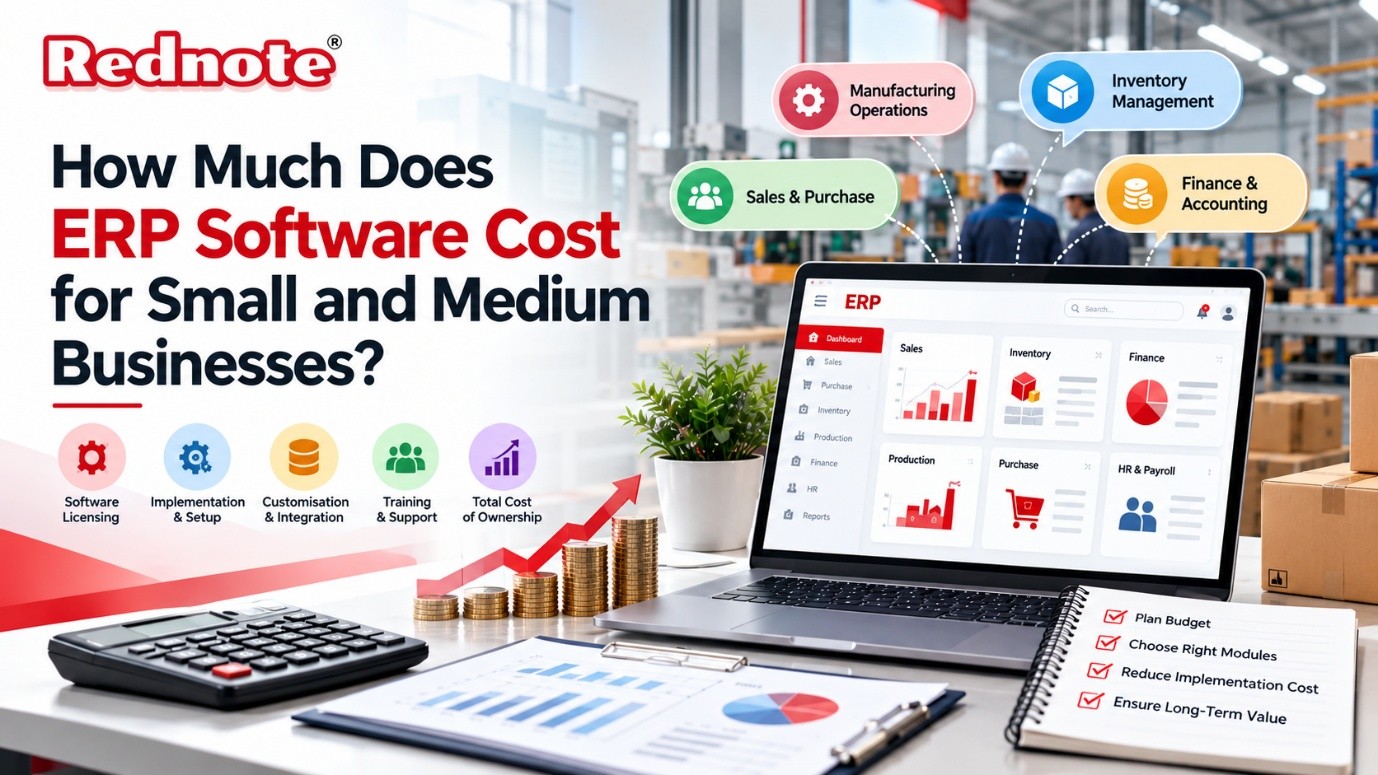
How Much Does ERP Software Cost for Small and Medium Businesses?
In today’s fast-paced corporate environment, managing daily operations through scattered spreadsheets and disconnected apps quickly leads to bottlenecks, data errors, and inventory tracking issues. Investing in a robust enterprise resource planning platform unifies finance, inventory, sales, and supply chain management into a single source of truth. If you are exploring modern digital solutions to streamline operations, understanding the complete financial breakdown of an ERP software is essential before committing capital. Small and medium-sized businesses (SMBs) must carefully analyze upfront investments, recurring licensing fees, setup costs, and long-term maintenance to ensure maximum return on investment.
Key Factors Influencing ERP Software Costs for SMBs
The price tag of an enterprise platform is never a static number. Costs fluctuate depending on your company’s size, operational complexity, industry requirements, and chosen deployment method.
1. Cloud vs. On-Premise Deployment
- Cloud-Based (SaaS): Cloud systems operate on subscription-based pricing (monthly or annually). They significantly reduce initial capital expenditure because server hardware, security patches, and database management are handled by the software vendor.
- On-Premise Infrastructure: On-premise installations require purchasing perpetual software licenses, dedicated physical servers, network hardware, and maintaining an in-house IT infrastructure team. This model incurs substantial upfront costs.
2. User Licences and Business Modules
Pricing models typically depend on the total number of active users, concurrently active users, or functional modules. Basic modules include core accounting, billing, and inventory control. Advanced capabilities—such as automated production planning, Material Requirements Planning (MRP), multi-warehouse shelf management, quality assurance, and automated payroll—add to the overall cost.
3. Customization and Data Migration
Standard off-the-shelf software is more budget-friendly. However, if your business requires customized workflows, specialized approval hierarchies, white-label options, or extensive data migration from older accounting tools, implementation costs naturally rise.
Expected ERP Pricing Models in India
Selecting the Best ERP software requires choosing a pricing structure that aligns with your operational cash flow.
| Pricing Model | Target Business Size | Estimated Cost Range (INR) | Key Benefits |
|---|---|---|---|
| Basic Cloud Subscription | Startups & Micro SMBs | ₹999 – ₹2,500 / user / month | Zero server costs, low initial risk, fast setup |
| Advanced Cloud Suite | Growing SMBs & Manufacturers | ₹2,500 – ₹7,500 / user / month | Full supply chain, MRP, multi-warehouse, custom workflows |
| Perpetual License (On-Premise) | Mid-Sized & Large Enterprises | ₹5,000,000+ (One-time) | Full data ownership, deep system customization |
Note: Pricing vary based on specific feature modules, implementation scopes, and user seat additions.
Understanding Manufacturing ERP Software Costs
For production plants and factories, generic accounting software falls short. A dedicated Manufacturing ERP software includes essential tools such as multi-level Bill of Materials (BOM) creation, shop floor tracking, work order assignments, subcontracting management, and production costing.
Total Cost of Ownership = Software Subscription + Implementation & Setup + Training & Support + Maintenance
Because industrial applications require continuous integration with shop floor machinery, barcode scanners, and government e-Invoicing compliance portals, pricing for manufacturing solutions involves additional implementation considerations:
- Bill of Materials (BOM) & Work Orders: Multi-level BOM management requires precise data configuration during initial setup.
- Quality Control & Parameter Inspections: Implementing quality checkpoints during raw material receiving (GRN) and production stages requires structured testing templates.
- Subcontracting & Material Tracking: Tracking raw materials sent to third-party vendors and receiving semi-finished goods adds operational workflows that need proper end-user training.
Hidden Costs to Consider Before Buying an ERP System
When evaluating an ERP software India provider, looking beyond the advertised subscription cost helps avoid unexpected budget overruns.
- Data Cleaning & Migration: Transferring historical financial data, vendor lists, and inventory master records from legacy platforms into a modern database requires manual audit hours or specialized data conversion scripts.
- System Integration: Connecting your core operational suite with external platforms (such as Tally accounting synchronization, payment gateways, or e-commerce storefronts) may involve one-time integration fees.
- User Training & Change Management: Employee adoption is crucial. Allocating time and resources for comprehensive staff training ensures that sales, purchase, warehouse, and production teams use the software effectively.
- Third-Party API & Hardware Costs: Barcode readers, RFID tags, mobile barcode scanning devices, and automated SMS/email gateways add minor operational expenses to the total budget.
Why SMBs Choose Rednote for Affordable Business Automation
Finding an enterprise-grade platform that balances advanced functionality with cost-effective pricing is a top priority for growing companies. Many growing enterprises trust Rednote to manage end-to-end business operations seamlessly. From real-time inventory tracking and GST e-Invoicing to complete manufacturing workflows, Rednote offers scalable options that allow SMBs to expand without excessive software overhead.
Calculating ROI: Is an ERP System Worth the Investment?
While adopting an integrated operational platform involves a predictable investment, the long-term ROI far outweighs the initial expense.
- Reduced Material Wastage: Automated Material Requirements Planning (MRP) prevents stockouts and over-purchasing of expensive raw materials.
- Improved Cash Flow: One-click e-Invoicing, automated payment tracking, and GST reporting streamline collections and lower Days Sales Outstanding (DSO).
- Enhanced Productivity: Eliminating duplicate manual entries across department spreadsheets saves dozens of administrative hours weekly.
- Data-Driven Decisions: Real-time analytical dashboards provide owners and production heads with instant visibility into job profitability, production costs, and vendor performance.
When picking an ERP system, SMBs should select solutions that scale with user additions and offer transparent, predictable subscription fees.
Choosing the Right ERP Partner for Long-Term Growth
Implementing specialized enterprise software is a long-term strategic partnership, not just a software purchase. Small and medium enterprises should select vendor platforms that provide responsive technical support, dedicated onboarding sessions, and flexible deployment models. Choosing a feature-rich ERP software for manufacturing company guarantees that your business operations stay organized, tax-compliant, and ready for expansion.