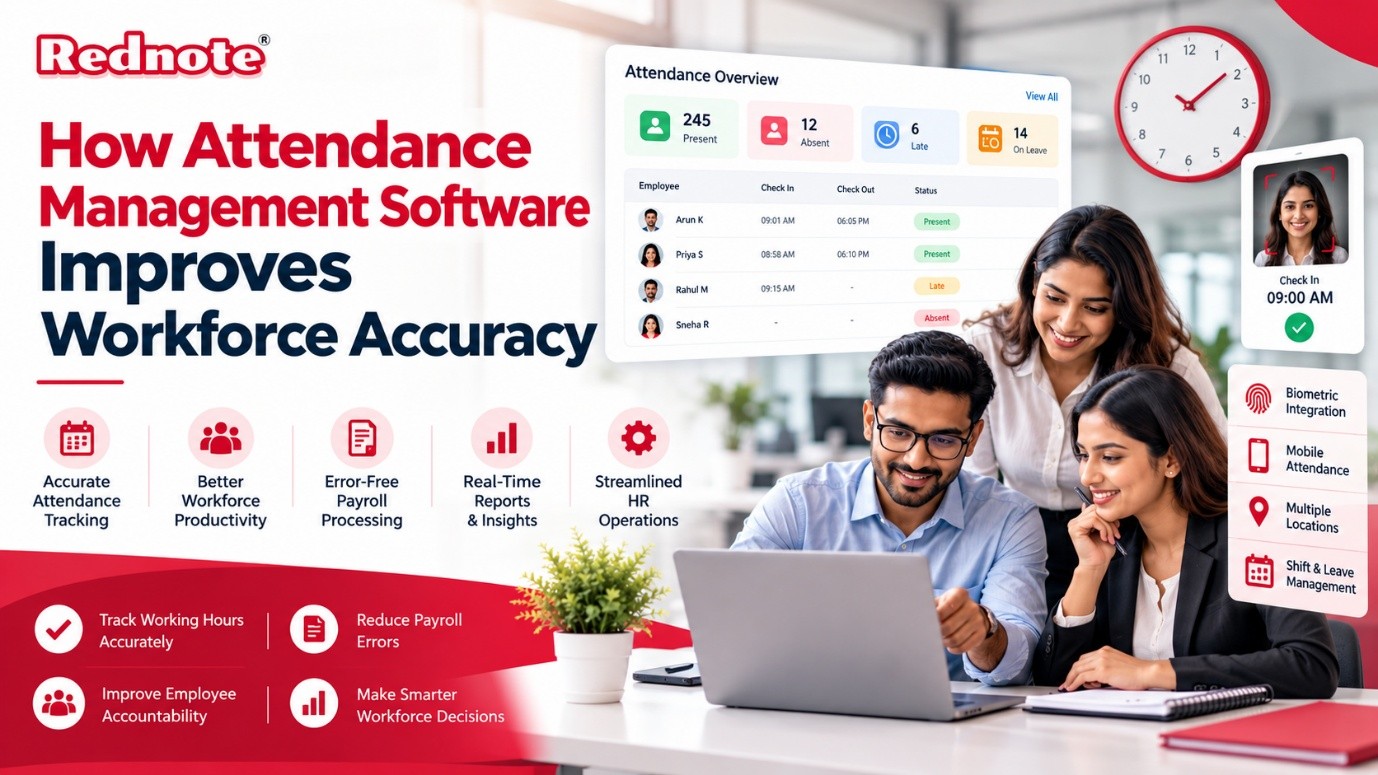
How Attendance Management Software Improves Workforce Accuracy
In the fast-paced business environment of today, maintaining precise records of employee work hours is a foundational pillar for operational success. Traditional paper logs, manual punch cards, and outdated spreadsheet tracking methods are increasingly prone to human error, buddy punching, and administrative delays. Organizations striving for optimal productivity and error-free financial disbursements must transition toward digital solutions. Implementing robust digital platforms, particularly advanced HRMS software, fundamentally transforms how organizations monitor time, attendance, and daily workforce engagement.
When businesses adopt dedicated attendance management systems, they eliminate guesswork, protect their bottom line, and cultivate a culture of transparency and accountability across all operational departments.
The Evolution of Time Tracking in Modern Businesses
For decades, tracking employee attendance was an administrative headache. Supervisors spent countless hours manually compiling timesheets, calculating overtime, and cross-referencing vacation days before handing data over to the finance department. This manual approach invited numerous discrepancies.
As corporate ecosystems expanded into hybrid and multi-location models, these traditional systems completely broke down. Modern enterprises needed a centralized solution that could aggregate data in real-time without cumbersome paperwork. This shift brought sophisticated workforce management tools to the forefront, allowing companies to automate data collection from diverse sources, including biometric hardware, mobile applications with geo-location, and secure web portals. By modernizing these workflows, organizations create a seamless bridge between daily attendance logs and financial compensation.
Core Mechanisms Driving Workforce Precision
Achieving absolute precision in workforce data requires more than simply recording when an employee arrives and leaves. Modern attendance solutions incorporate multi-layered tracking mechanisms designed to capture the nuances of daily operations.
- Biometric and RFID Integration: Physical authentication devices prevent unauthorized time entries and eliminate buddy punching. Employees log in using fingerprint scans, facial recognition, or secure RFID cards, ensuring that the person present at the workstation is precisely the person recorded in the system.
- Real-Time Monitoring: Instead of waiting until the end of a pay period to review hours, supervisors gain immediate visibility into attendance trends. Managers can instantly identify tardiness, unexpected absences, or early departures as they happen, enabling prompt communication and proactive resource reallocation.
- Automated Policy Enforcement: Businesses operate under unique shift schedules, grace periods, and overtime regulations. Attendance systems apply these rules uniformly across the organization, removing subjective managerial interpretation and ensuring fair treatment for every staff member.
When these capabilities are integrated into a comprehensive platform like HR software, administrative friction diminishes entirely, allowing human resources teams to focus on strategic employee engagement rather than tedious data entry.
Eliminating Payroll Discrepancies and Errors
One of the most immediate benefits of accurate attendance tracking is the dramatic reduction of payroll errors. Discrepancies in salary disbursements are frustrating for employees and damaging to workplace morale. When extra hours worked, unpaid leaves, and late arrivals are recorded manually, the risk of miscalculation multiplies during every pay cycle.
Automated timekeeping systems link directly with payroll software to streamline the transition from attendance logs to salary disbursement. Hours worked are calculated instantly, overtime is factored in according to pre-set multiplier rules, and deductions for unauthorized absences occur without manual intervention. This direct integration guarantees that employees receive exact compensation for their time, fostering trust and financial security throughout the organization. Furthermore, finance teams save dozens of administrative hours each month, redirecting their energy toward financial planning and strategic business analysis.
Enhancing Productivity and Accountability
Precision in attendance tracking extends far beyond calculating paychecks; it directly influences daily productivity. When employees know that their working hours are monitored accurately and fairly, accountability naturally increases.
Transparency in attendance records eliminates ambiguity regarding punctuality and participation. Employees take greater ownership of their schedules, strive to meet punctuality standards, and respect core working hours. Moreover, managers are empowered with actionable analytics. Instead of relying on gut feelings, supervisors can review comprehensive attendance reports to spot chronic absenteeism, evaluate departmental workload distribution, and plan staffing levels effectively during peak business seasons.
Platforms equipped with built-in Employee Self-Service (ESS) portals further empower staff members. Employees can view their attendance history, check leave balances, and review shift schedules directly from their devices. This accessibility reduces the volume of routine inquiries directed at human resources personnel, creating a more efficient and self-sufficient workforce.
Ensuring Statutory Compliance and Audit Readiness
Labor regulations and employment laws impose strict standards on working hours, mandatory breaks, overtime compensation, and statutory record-keeping. Failing to maintain accurate attendance logs can expose an enterprise to severe legal penalties, audits, and employee grievances.
Modern HR payroll software simplifies compliance by maintaining immutable digital records of all employee working hours and leave requests. When regulatory bodies request documentation, human resources teams can generate comprehensive, tamper-proof reports with a single click. This level of preparedness shields the organization from liability, ensures adherence to regional labour laws, and establishes a secure operational framework that stands up to rigorous scrutiny.
Strategic Implementation of Attendance Solutions
Maximizing the benefits of digital attendance tracking requires a thoughtful deployment strategy. Organizations must evaluate their specific operational needs, choose scalable solutions, and ensure thorough onboarding for all staff members.
Platforms such as Rednote offer intuitive interfaces that integrate effortlessly with existing business workflows, biometric hardware, and accounting structures. Whether managing a centralized office or a dispersed hybrid team, businesses can configure custom leave policies, automate overtime calculations, and generate detailed analytical dashboards. By adopting a centralized approach, companies eliminate data silos and build a cohesive ecosystem where HR, payroll, and department managers operate from a single source of truth.
Conclusion
Precision in workforce management is no longer an optional luxury; it is a critical competitive advantage. Relying on manual timesheets invites errors, administrative bottlenecks, and employee dissatisfaction that can undermine organizational growth. By implementing sophisticated tracking solutions and partnering with trusted providers like Rednote, businesses can automate complex calculations, eliminate discrepancies, and ensure absolute workforce accuracy. Embracing these advanced digital tools paves the way for streamlined operations, heightened productivity, and sustained long-term success.