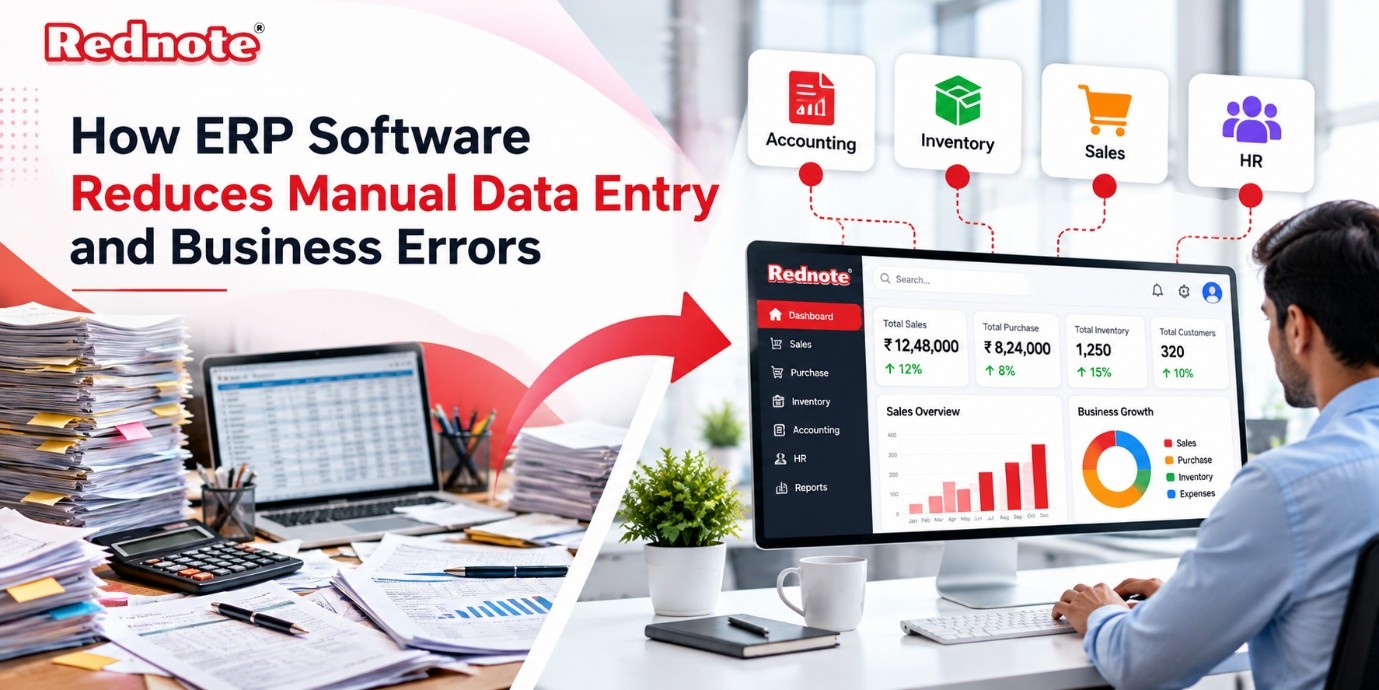
How ERP Software Reduces Manual Data Entry and Business Errors
In today’s fast-paced competitive landscape, running a successful enterprise means managing numerous moving parts simultaneously—from inventory control and customer relationships to financial ledgers and human resources. For businesses striving to scale rapidly and maintain strict operational accuracy, adopting advanced solutions like ERP software Chennai has transitioned from a luxury to an absolute necessity. Traditional operational models heavily rely on fragmented spreadsheets, disconnected desktop applications, and manual paperwork. While these old-school methods might feel familiar, they introduce significant bottlenecks, consume valuable employee hours, and leave the door wide open for human mistakes. When data must be re-keyed across multiple independent systems, the probability of typos, misplaced figures, and miscommunicated details multiplies drastically. This comprehensive guide explores how modern enterprise resource planning systems eliminate tedious manual data entry, mitigate costly business errors, and transform organizational productivity from the ground up.
The Hidden Costs of Manual Data Entry and Disconnected Workflows
Every business owner or operations manager knows the sinking feeling of discovering a late shipment, a miscalculated invoice, or a stock discrepancy just hours before a major client deadline. More often than not, these issues stem not from poor intentions or incompetent staff, but from the inherent flaws of manual data entry. When an employee receives a customer purchase order via email and manually types those details into a separate billing tool, copies the inventory count into a stock register, and updates a separate spreadsheet for accounting, the margin for error is immense.
Typographical mistakes, transposition of numbers, and forgotten updates create a cascading effect of inaccurate records. For instance, a single mistyped digit in a product code or pricing field can result in under billed invoices, delayed shipments, or inventory counts that do not match physical warehouse realities. Furthermore, manual entry drains valuable human capital. Employees spend hours every week performing repetitive, low-value administrative tasks instead of focusing on strategic growth, customer acquisition, or product innovation. Over time, these inefficiencies accumulate, eroding profit margins, frustrating team members, and damaging customer trust through avoidable fulfillment delays.
How Enterprise Resource Planning Centralizes Information
The core advantage of implementing an integrated digital platform lies in its centralized architecture. Instead of maintaining siloed data islands where sales, accounts, and warehouse teams work off separate records, an enterprise solution establishes a single source of truth. When an event occurs—such as a new customer order being confirmed—the information flows seamlessly across every relevant department in real time.
For growing enterprises evaluating regional tech investments, adopting specialized solutions such as ERP software Chennai ensures that departments operate collaboratively rather than in isolation. Sales teams can instantly view live inventory levels before committing to delivery dates, finance professionals can access automated ledger updates the moment an invoice is generated, and warehouse managers can track incoming purchase requests without making phone calls or checking physical clipboards. By eliminating the need to re-enter data at every operational handoff, the system ensures complete data integrity throughout the entire lifecycle of a transaction.
Streamlining Core Business Operations to Eliminate Errors
To truly appreciate how automated workflows minimize mistakes, it helps to examine how specific business modules function within a unified ecosystem:
1. Automated Inventory and Stock Tracking
Manual stock registers frequently fail to reflect actual warehouse conditions due to unrecorded damages, forgotten returns, or delayed entry. Integrated enterprise solutions automate stock adjustments the moment goods are received, packed, or dispatched. By connecting sales orders directly with inventory levels, the software prevents overselling, flags shortages before they halt production, and maintains precise stock valuations without manual counting errors.
2. Error-Free Financial Accounting and Compliance
Managing accounts manually requires meticulous record-keeping across cash flows, receivables, and payables. A single misplaced decimal point in a ledger can throw off balance sheets and complicate tax filings. Modern platforms incorporate built-in accounting modules that automatically capture financial transactions from sales and purchase workflows. This eliminates duplicate data entry, ensures precise tax calculations, and generates instantaneous financial statements, giving leadership absolute confidence in their numbers.
3. Seamless Sales Automation and Document Generation
Manual invoicing and dispatch documentation are notorious breeding grounds for clerical mistakes. When staff members manually re-type customer addresses, item descriptions, and tax rates onto delivery challans or invoices, errors inevitably creep in. Sales automation features within reliable platforms allow teams to generate quotations, proforma invoices, e-way bills, and final invoices using standardized templates linked directly to master data. Converting a purchase order into a sales invoice takes just a click, instantly updating inventory and accounting records simultaneously.
4. Human Resources and Payroll Accuracy
Employee records, attendance tracking, and monthly payroll computations involve complex calculations that demand 100% precision. Manual timesheets and scattered leave registers frequently lead to payroll disputes, calculation mistakes, and compliance penalties. Centralized human resource modules streamline attendance tracking, leave requests, and salary computations into a unified workflow, cutting down administrative hours and ensuring every employee is compensated accurately and on time.
Leveraging Rednote for Superior Accuracy and Efficiency
When businesses search for reliable platforms to optimize their daily workflows, choosing the right technology partner makes all the difference. RedNote provides robust operational tools designed to eliminate administrative friction and secure data accuracy across every department. Through optimized solutions offered by ERP software Chennai, organizations gain access to intuitive modules encompassing CRM, inventory management, accounting, manufacturing workflows, and human resources on a single live cloud platform.
Beyond streamlining operations, businesses must also consider software accessibility and architecture. Companies utilizing Rednote benefit from a scalable SaaS model that adapts seamlessly to growing teams without introducing complex enterprise overhead. Furthermore, organizations exploring advanced digital transformation can rely on Rednote to bridge communication gaps between departments, ensuring that every transaction, report, and customer interaction is recorded accurately and transparently from day one.
Conclusion: Embracing Automation for Sustainable Growth
Manual data entry is an invisible tax on business productivity, draining employee morale, inflating operational costs, and inviting avoidable errors that can harm customer relationships. Transitioning away from fragmented spreadsheets and disconnected desktop tools toward a unified digital ecosystem is no longer reserved for multinational conglomerates. By implementing robust platforms such as ERP software Chennai, organizations of all sizes can automate repetitive tasks, secure real-time data visibility, and empower their teams to focus on high-value strategic objectives. Embracing enterprise resource planning is a decisive step toward operational excellence, ensuring greater accuracy, faster turnaround times, and sustainable long-term profitability.