



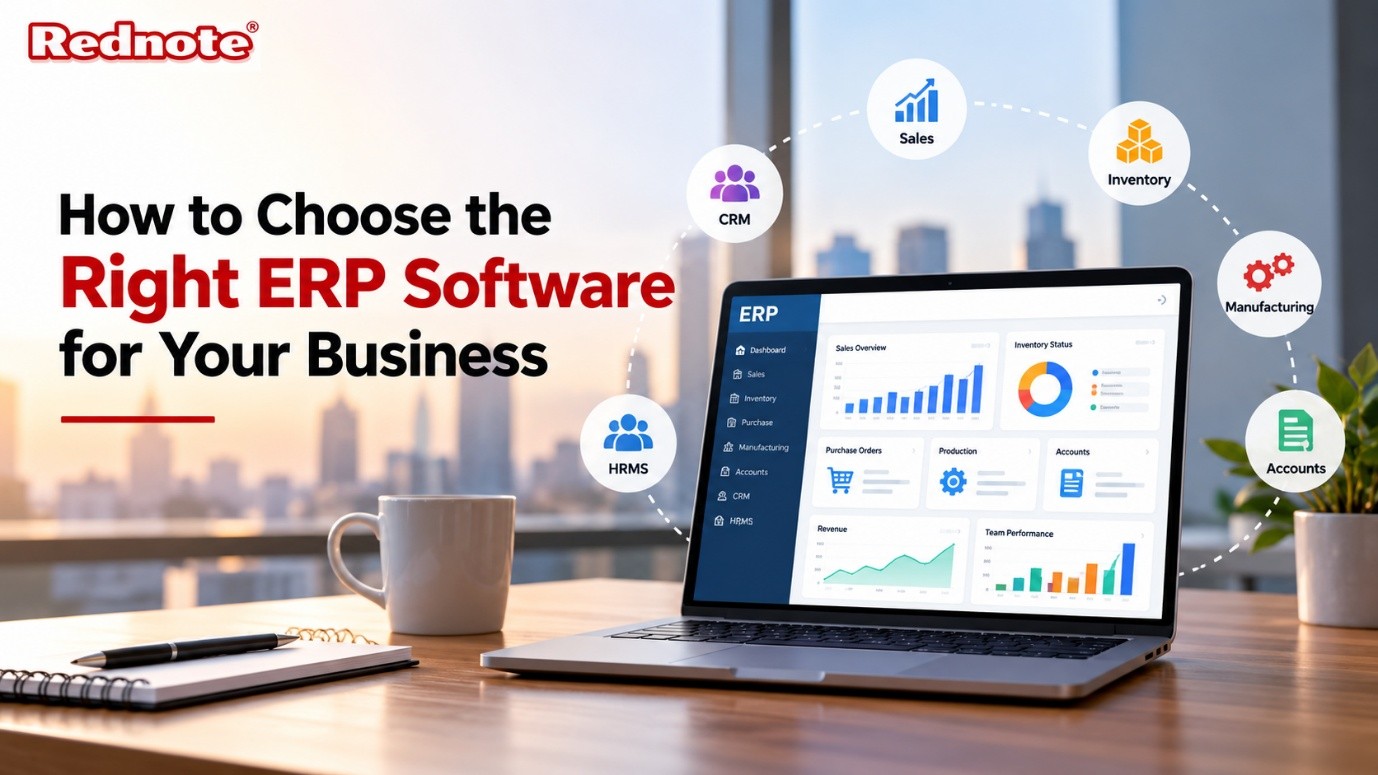
How to Choose the Right ERP Software for Your Business
Managing a growing company requires constant operational balance across departmental teams. As sales orders expand and employee headcount increases, relying on disconnected accounting spreadsheets and manual registers exposes critical workflow bottlenecks. Disjointed tools lead to stock shortages, delayed shipments, inaccurate financial reporting, and lost sales leads. Implementing a unified digital foundation transforms how teams collaborate, which is why adopting robust enterprise platforms—such as choosing ERP software Chennai businesses rely on—has become a foundational priority for modern commercial enterprises seeking sustainable expansion.
Selecting an Enterprise Resource Planning (ERP) platform is a strategic decision that shapes your daily operations for years to come. The right platform connects accounting, customer relationship management (CRM), inventory control, human resources, and manufacturing operations into a single live source of truth. With dozens of software packages and subscription models available today, selecting the ideal fit for your specific operational scale requires a clear evaluation framework. This comprehensive guide walks you through every essential step of evaluating, selecting, and implementing the perfect system for your organization.
Audit Your Internal Workflows and Operational Bottlenecks
Before reviewing vendor software demonstrations or comparing subscription plans, perform an internal audit of your current operational processes. Software deployments fail most frequently not because of software code glitches, but because companies select platforms that fail to match their everyday workflows.
Gather operational insights directly from department leads—finance managers, warehouse supervisors, sales representatives, and shop-floor coordinators. Ask clear operational questions during your internal review:
- Where do manual data entry errors occur most frequently in daily tasks?
- How long does it take your accounting team to compile monthly balance sheets?
- Do physical stock counts in your warehouse match the numbers in your records?
- Are sales managers losing track of potential leads due to irregular follow-up schedules?
Documenting these operational pain points creates an objective baseline. This baseline helps you evaluate software platforms based on direct operational needs rather than attractive vendor promises.
Define Essential Core Modules vs. Secondary Features
Once you identify your primary operational challenges, translate those operational gaps into clear system feature requirements. Create a prioritized operational checklist categorizing features into essential requirements and secondary preferences.
Core operational modules typically include:
- Financial Management & Accounting: Automated ledgers, cash flow statements, GST return processing, receivables, and payables tracking.
- Inventory Control & Procurement: Real-time stock visibility, warehouse allocation, reorder point alerts, and batch tracking.
- CRM & Sales Automation: Pipeline tracking, customer segmentation, automated quotations, proforma invoices, and e-way bill creation.
- Human Resource Management (HRMS): Automated payroll processing, employee attendance tracking, timesheets, and leave approvals.
- Manufacturing & Production Planning: Bill of Materials (BOM), Material Requirement Planning (MRP), quality control checklists, and machine efficiency monitoring.
Distinguishing critical features from nice-to-have options prevents scope creep and keeps your software selection budget aligned with genuine business requirements.
Compare Deployment Architecture: Cloud vs. On-Premise
The technical architecture behind your management platform determines your initial setup capital, long-term operational costs, system accessibility, and data maintenance overhead.
Cloud-Based ERP (SaaS)
Cloud platforms are hosted on secure remote infrastructure and accessed through web browsers or mobile devices. This deployment model offers significant advantages for fast-growing companies:
- Lower Upfront Costs: Eliminates the need to buy expensive local servers or maintain physical data centers.
- Predictable Expense: Operates on user-based subscription tiers, allowing predictable financial planning.
- Instant System Updates: Software improvements, tax rule changes, and feature additions happen automatically without manual intervention.
- Remote Operational Access: Managers and sales teams can monitor live operational data from any location using smartphones or laptops.
On-Premise ERP
On-premise solutions run on dedicated server hardware physically installed within your company premises.
- Direct Infrastructure Control: Complete physical possession of server hardware and local data storage.
- Offline Operation: Works across local office networks without relying entirely on external internet connectivity.
- Higher Total Ownership Cost: Requires substantial initial software license investments, local hardware capital, and ongoing IT support personnel.
For the vast majority of small and mid-sized enterprises, modern cloud systems offer superior operational agility, faster setup schedules, and significantly lower total cost of ownership.
Prioritize Regional Market Capabilities and Industry Fit
Generic, standard software platforms rarely satisfy complex operational workflows straight out of the box. A precision engineering business requires detailed batch tracking and raw material planning, whereas a fast-moving trading firm prioritizes rapid multi-location stock synchronization and automated sales invoicing.
Selecting a platform tailored to regional market demands ensures smoother adoption and seamless compliance. Organizations modernizing operations across major technology centers frequently look for ERP software Bangalore innovation hubs favour due to easy API integrations and scalable user pricing. Choosing a system designed with regional business ecosystems in mind ensures your operations stay compliant with local tax structures and industry standards.
Furthermore, ensure your chosen platform supports multi-branch operations, flexible unit-of-measure conversions, and automated GST compliance so your team can expand into new markets without changing systems.
Evaluate Engineering and Industrial Production Features
For production-focused enterprises, software selection requires looking beyond general accounting tools. Manufacturing environments demand real-time visibility into raw material movements, shop-floor schedules, quality checks, and production costs.
When reviewing industrial automation tools, mid-sized factories evaluating ERP software Coimbatore manufacturing clusters rely on prioritize strong Material Requirement Planning (MRP) and Bill of Materials (BOM) management. These tools automatically compare incoming purchase orders against existing warehouse stock, generating purchase requests before raw material shortages delay production schedules.
Having dedicated quality control checks built directly into raw material receiving and finished goods dispatch prevents defective inventory from reaching clients, directly protecting business margins.
Align Software Selection with Commercial and Service Scale
Commercial trading operations, distribution networks, and service-oriented enterprises face distinct operational demands centered around rapid lead response times, accurate billing, and synchronized multi-location inventory.
Commercial firms exploring ERP software Hyderabad enterprise markets utilize emphasize strong sales automation alongside multi-branch financial accounting. Connecting customer inquiries directly with live inventory and billing records ensures that quote generation, sales order confirmation, and invoice creation occur seamlessly without manual re-entry.
When lead tracking, inventory allocation, and ledger updates happen automatically on one screen, sales teams close deals faster while accounting teams maintain accurate records effortlessly.
Assess Operational Requirements Across Major Trading Hubs
High-volume trading hubs demand systems capable of managing massive daily transaction volumes, complex logistics, and multi-warehouse supply chains without system slowdowns.
Enterprises managing large logistics networks and commercial hubs while reviewing ERP software Mumbai trading corridors adopt demand robust supply chain visibility, clear accounts receivable tracking, and real-time cash flow reporting. Immediate visibility into client payment aging enables collection teams to follow up promptly, reducing outstanding bad debts and preserving working capital.
Selecting a platform built to handle heavy transactional volumes ensures your business operates continuously without performance lag during peak sales seasons.
Focus on Quality Assurance and Shop-Floor Compliance
In precision manufacturing and automotive supply chains, operational success depends heavily on strict compliance with quality standard operating procedures (SOPs).
Engineering facilities comparing ERP software Pune automotive and manufacturing sectors implement require customizable quality inspection checklists linked directly to production batch numbers. Storing permanent digital records of incoming material inspections and outgoing product audits simplifies regulatory compliance while ensuring complete audit readiness.
Built-in quality audit trails ensure that any material defect is flagged immediately, allowing supervisors to initiate rework or disposition workflows before products leave the factory.
Streamline Multi-Location Distribution and Statutory Compliance
Managing multi-state logistics, warehouse dispatches, and regulatory reporting requires a centralized control panel that automates compliance documentation seamlessly.
Distribution enterprises evaluating ERP software Delhi regional networks deploy focus heavily on quick delivery challan preparation, automated stock transfers across branches, and single-click e-way bill generation. Integrating dispatch creation directly with live stock deductions guarantees that warehouse inventories stay synchronized across all regional facilities automatically.
Automating statutory tax documentation eliminates human typographical errors, preventing delivery delays at check-posts and ensuring full regulatory compliance.
Prioritize User Experience, Interface Simplicity, and Mobile Use
The ultimate metric of success for any software investment is employee adoption. If your team finds the interface complex, navigation confusing, or data input tedious, they will naturally revert to legacy spreadsheets and paper notes.
Key usability factors to test during vendor trials include:
- Clean Navigation Dashboards: Important key performance indicators—such as daily sales figures, low-stock warnings, and pending approvals—should appear clearly on main screens.
- Role-Based User Permissions: Field technicians, warehouse staff, sales reps, and financial auditors should only see screen options relevant to their specific daily duties.
- Mobile Application Access: Sales representatives and field managers need responsive mobile interfaces to log customer notes, issue quotes, and review inventory availability on the move.
Providing staff with an intuitive interface reduces onboarding training time and ensures rapid, error-free daily utilization across departments.
Calculate the Complete Total Cost of Ownership (TCO)
Evaluating software packages requires looking beyond the advertised monthly user fee. Unanticipated setup costs or hidden customization fees can drastically expand your implementation budget if not identified early.
Key cost components to clarify with vendors include:
- Initial Setup & Configuration Fees: One-time charges for configuring master data structures, user accounts, and initial workflows.
- Recurring Licensing & User Subscriptions: Monthly or annual costs based on active user seats or selected functional modules.
- Data Migration Costs: Fees associated with cleaning, formatting, and transferring historic financial and inventory records into the new platform.
- Customization & Integration Expenses: Costs for developing custom report layouts, specialized document templates, or third-party software connections.
- Post-Implementation Support SLAs: Ongoing technical support fees, user retraining costs, and system update policies.
Requesting a clear, itemized pricing agreement protects your budget and establishes clear accountability with your software partner.
Modernize Business Operations with RedNote ERP
Transitioning from fragmented, isolated tools to a fully unified enterprise platform is the most effective step a growing enterprise can take to secure operational clarity.
By unifying CRM, financial accounting, inventory tracking, HRMS, and manufacturing processes onto a single live system, platforms created by Rednote eliminate duplicate data entry, lower operational errors, and provide leadership teams with real-time business analytics. Whether running a startup trading firm or a full-scale manufacturing facility, choosing an intuitive, scalable platform like Rednote equips your business to automate routine tasks, serve customers faster, and maintain healthy profit margins as you scale.
Recommended Step-by-Step Selection Roadmap
To ensure a smooth transition from legacy tools to your new management system, follow this structured, five-stage implementation roadmap:
- Form an Internal Steering Project Group: Appoint an internal project manager along with key representatives from Finance, Warehouse, Sales, and Production.
- Shortlist Top Vendor Platforms: Select three to four platforms and request customized walkthroughs using your real business scenarios instead of standard generic product slides.
- Conduct a Real-Data Proof of Concept (PoC): Upload sample master data—such as a complex multi-item invoice or production Bill of Materials—to test calculation accuracy and workflow speed.
- Clean Master Data Prior to Import: Review and clean up existing client files, raw material catalogs, and opening ledger balances before importing data into the live platform.
- Execute Structured Phased Training: Train key power users first, run parallel accounting checks for a brief transition period, and then launch full live operations confidently.