



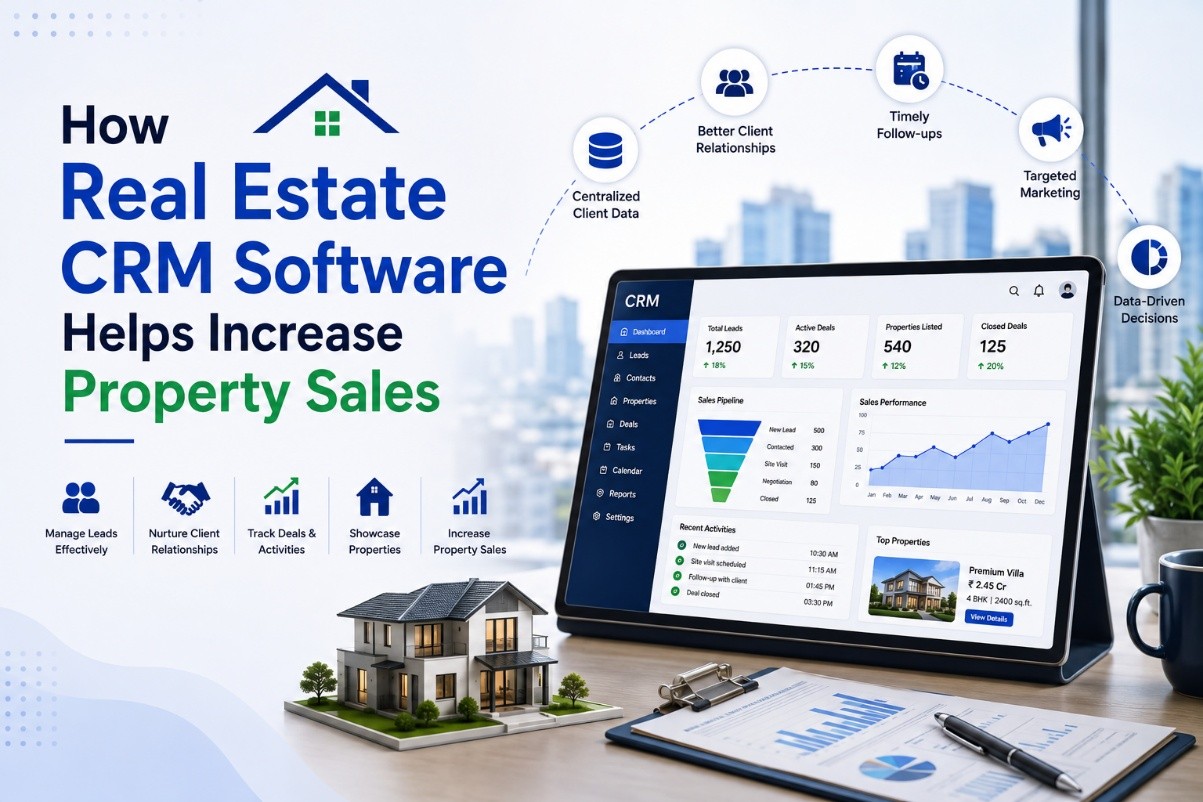
How Real Estate CRM Software Helps Increase Property Sales
Selling property today is not just about having good listings. Buyers compare dozens of options online, take longer to decide, and expect quick, personalized responses. Real estate agents and agencies who rely only on spreadsheets, sticky notes, or memory to track leads often lose deals simply because a follow-up call came too late. This is exactly where real estate CRM software changes the game.
A Customer Relationship Management (CRM) system built for real estate helps agents capture leads, track every conversation, automate follow-ups, and close deals faster — all from one dashboard. In this article, we break down how Real Estate CRM Software works, why it directly increases property sales, and what features to look for before choosing one.
What Is Real Estate CRM Software?
Real estate CRM software is a specialized tool designed to help agents, brokers, and agencies manage the entire customer journey — from the moment a lead enquires about a property to the day the deal is closed. Unlike generic CRMs, real estate-specific platforms
Instead of juggling WhatsApp chats, Excel sheets, and email threads, agents get a single source of truth for every buyer, seller, and tenant they interact with.
How Real Estate CRM Software Increases Property Sales
1. Centralized Lead Management
Every enquiry — from your website, Facebook Ads, Google Ads, property portals, or walk-ins — gets automatically captured into one dashboard. No lead is missed, and every team member knows exactly who is following up with whom.
2. Faster Response Time
Studies consistently show that leads contacted within the first five minutes convert far better than leads contacted hours later. CRM software sends instant notifications to agents the moment a new lead comes in, drastically cutting response time.
3. Automated Follow-Ups
Most real estate deals are lost not because the buyer said no, but because nobody followed up. CRM tools let you set automated reminders, WhatsApp/SMS templates, and drip email sequences so no prospect is forgotten.
4. Smart Property Matching
A good CRM matches buyer requirements (budget, location, BHK type, amenities) with available inventory automatically, saving agents hours of manual searching and helping them present the right options faster.
5. Sales Pipeline Visibility
Managers can see exactly where each lead stands — New, Contacted, Site Visit Scheduled, Negotiation, or Closed — helping identify bottlenecks and coach agents on deals that are stuck.
6. Data-Driven Decision Making
CRM dashboards show which marketing channel brings the most conversions, which agent closes the fastest, and which property type sells quicker — helping agencies invest budget where it actually works.
7. Better Customer Experience
Better Customer Experience
Buyers remember agents who follow up on time, remember their preferences, and communicate clearly. CRM software helps deliver that consistency at scale, building trust that leads to referrals.
Key Features to Look for in a Real Estate CRM
| Feature | Why It Matters |
|---|---|
| Lead capture from multiple sources | Ensures no enquiry from portals, ads, or website is missed |
| WhatsApp & SMS automation | Keeps communication fast and personal, where Indian buyers respond most |
| Property-buyer matching | Saves time by auto-suggesting relevant listings to each lead |
| Site visit & task scheduling | Prevents missed appointments and improves team accountability |
| Sales pipeline & funnel view | Gives managers clear visibility into deal stages |
| Reporting & analytics dashboard | Helps track ROI on marketing spend and agent performance |
| Mobile app access | Lets agents update leads and respond on the go |
| Integration with portals & ad platforms | Reduces manual data entry and duplicate leads |
Pro Tip
Pro Tip: Don't just choose a CRM with the most features — choose one your team will actually use daily. A CRM with WhatsApp integration and mobile-first design usually sees far higher agent adoption than a feature-heavy desktop-only tool, especially for Indian real estate teams working on the field.
Common Mistakes Agencies Make Without a CRM
- Leads sitting untouched for hours or days due to no notification system
- Duplicate follow-ups from different agents contacting the same lead
- No visibility into which marketing campaign is actually generating sales
- Important buyer preferences forgotten between calls
- Site visits missed due to lack of scheduling reminders
Each of these directly costs agencies real revenue — and each is solved by implementing a proper CRM workflow.
How to Successfully Implement a CRM in Your Real Estate Business
- Map your current lead flow — understand where leads come from before automating.
- Choose a CRM built for real estate, not a generic sales CRM, so property-specific features are already built in.
- Train your team properly — adoption fails when agents find the tool confusing.
- Set up automated follow-up sequences from day one so no lead goes cold.
- Review reports weekly to spot drop-off points in your sales funnel.
Real estate CRM software is no longer optional for agencies serious about scaling their sales — it's become the backbone of how modern property businesses capture, nurture, and convert leads. By centralizing lead data, automating follow-ups, and giving clear visibility into the sales pipeline, a CRM directly reduces lost opportunities and increases closed deals. If your team is still tracking leads manually, switching to a dedicated real estate CRM could be the single biggest change that boosts your property sales this year.