



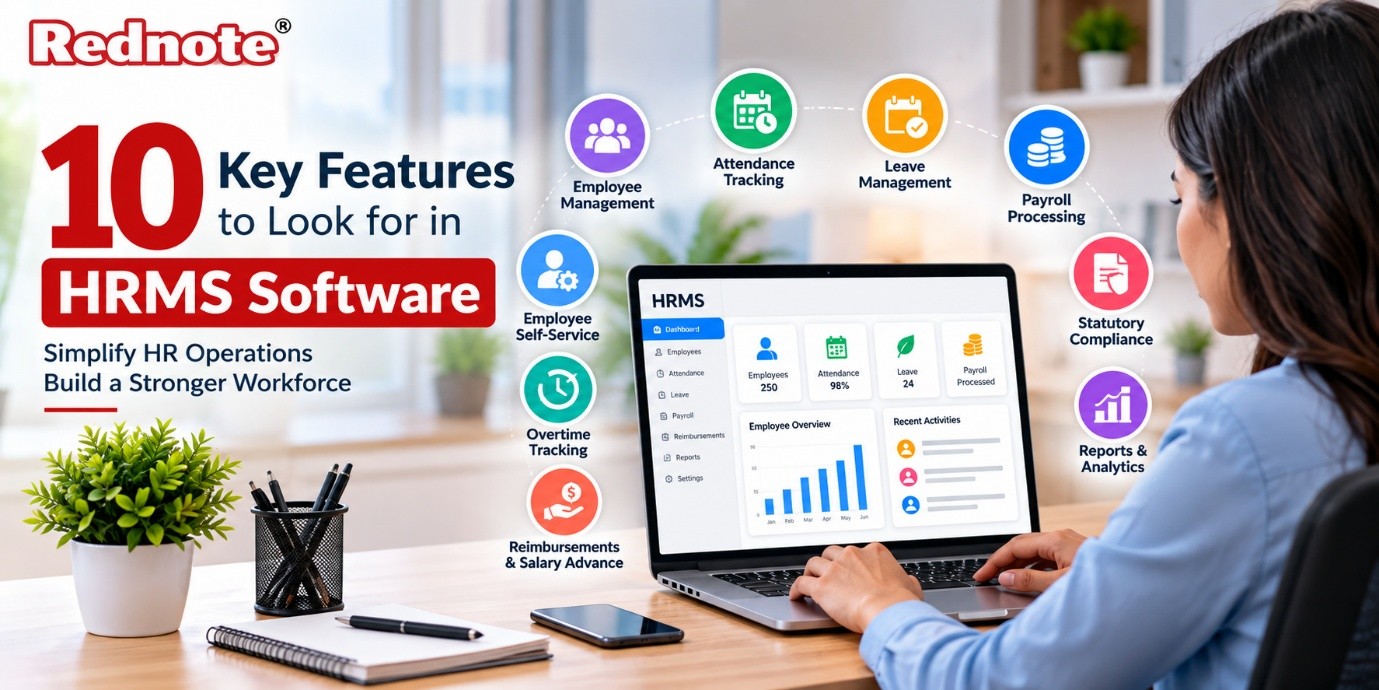
10 Key Features to Look for in HRMS Software
Managing modern workplace operations requires far more than basic spreadsheets and paper filing cabinets. As organizations scale, HR departments face increasing pressure to balance employee engagement with operational precision. Deploying a comprehensive HRMS software helps streamline administrative workflows, minimize human calculation errors, and maintain strict adherence to labour laws. However, choosing the right digital platform can feel overwhelming given the sheer volume of choices on the market today.
Selecting an enterprise solution is not merely about digitizing employee records; it is about establishing a unified operational backbone for your enterprise. A modern HR software suite should bring routine operations—from daily attendance capture to complex salary disbursements—into a single, intuitive platform. To help guide your evaluation process, we have outlined the ten mandatory features every growing enterprise should look for when investing in platform technology.
What is HRMS Software and Why Does Your Business Need It?
A Human Resource Management System (HRMS) acts as a centralized digital ecosystem for handling employee records, tracking working hours, calculating monthly salaries, and evaluating workplace performance. Without an integrated system, HR professionals spend up to 40% of their working hours manually reconciling attendance logs, updating reimbursement claims, and cross-checking tax declarations.
By automating these routine processes through intuitive technology platforms, businesses reduce administrative overhead while delivering a transparent workplace experience for their employees.
ten Mandatory Features of a High-Performing HRMS Platform
1. Real-Time Attendance & Biometric Integration
Accurate time tracking is the foundation of precise workforce administration. Modern workplace solutions must record daily clock-ins without requiring manual verification. Look for platforms that integrate directly with existing biometric hardware, RFID card readers, and GPS-enabled mobile check-in tools.
Key capabilities to check:
- Automated shift scheduling: Effortlessly manage dynamic, night, or rotating shifts.
- Geofenced attendance: Enable field agents to mark attendance within predefined boundaries.
- Anomaly detection: Automatically detect late check-ins, early exits, and unexcused absences.
2. Comprehensive Automated Payroll Processing
Manual salary processing frequently leads to calculation discrepancies, delayed payouts, and legal audit risks. A dedicated Payroll software module handles complex salary structures, variable allowances, dynamic deductions, and statutory payouts automatically.
An effective payroll setup handles diverse pay scales—including hourly wage rules (like 1.5x or 2x overtime rates)—and instantly processes month-end payouts without relying on external spreadsheets.
3. Employee Self-Service (ESS) Portal
Empowering team members to handle their own administrative requests significantly reduces routine HR helpdesk queries. An interactive Employee Self-Service portal gives staff 24/7 access to personal documentation directly from their desktop or mobile browsers.
Through an ESS portal, employees can:
- Download historical payslips and annual tax deduction statements.
- Submit formal leave applications and monitor approval statuses in real time.
- Upload expense claim receipts and track reimbursement lifecycles.
- Update personal details, contact information, and bank records.
4. Dynamic Leave Management & Custom Workflows
Managing leaves manually across multi-location teams often causes scheduling conflicts and operational bottlenecks. Advanced platforms allow administrators to define custom leave rules based on company policies, local labour regulations, and employment tiers.
The platform should support customizable leave categories (such as earned leave, casual leave, maternity leave, and sick leave), calculate accrued balances automatically, and display unified holiday calendars tailored to specific branch locations.
5. Automated Overtime & Salary Advance Tracking
Managing extra working hours and employee financial aid requests manually can quickly create accounting errors. Integrated HR payroll software tracks overtime hours accurately and routes them directly to monthly payroll cycles for compensation.
Likewise, structured salary advance tools enable employees to apply for financial assistance during urgent situations. The platform records digital advance histories, sets up multi-month recovery plans, and automates repayment deductions without requiring manual intervention during monthly payroll runs.
6. Automated Reimbursement Processing
Outdated receipt processing wastes valuable time for both employees and finance departments. A modern reimbursement module allows staff members to submit expense requests, upload digitally scanned invoices, and track claim approvals on the go.
Administrators can establish spending limits by employee level, flag policy violations automatically, and approve claims directly into the reimbursement queue for seamless payouts.
7. Automated Statutory Compliance & Audit Readiness
Navigating regional tax structures, provident fund (PF) requirements, Employee State Insurance (ESI), and labor laws demands constant vigilance. Failure to comply can result in severe financial penalties and legal complications.
Leading solutions come pre-configured with government-mandated statutory rules. Built-in compliance mechanisms automatically adjust for regular tax policy updates, run precise payroll deductions, and generate pre-formatted compliance reports ready for government audits.
8. Advanced Analytics, Dashboards & Exportable Reports
Strategic HR leaders rely on actionable data rather than intuition to make workforce decisions. A robust analytics engine generates customizable visual dashboards that summarize key performance indicators at a glance.
Look for tools that allow exportable reporting across multiple formats (Excel, PDF, CSV) to analyze:
- Workforce attrition rates and hiring trends.
- Monthly overtime expenditure vs. planned budget.
- Absenteeism patterns across departments.
- Comprehensive payroll and tax summary metrics.
9. Multi-Company & Scalable Infrastructure
As businesses open new branches, launch subsidiaries, or expand across regions, their administrative needs change rapidly. Software infrastructure should scale effortlessly without requiring full system migrations.
Multi-entity support enables managers to handle multiple company accounts, distinct business units, and decentralized workforce tiers from a single, unified administrative dashboard.
10. Robust Data Security & Encryption
HR databases store sensitive personal identifying details, financial statements, and salary records. Selecting software with bank-grade data security protocols is essential to guard against unauthorized access and cyber threats.
Ensure your chosen vendor implements role-based permission access, strict multi-factor authentication (MFA), and high-level data encryption standards both at rest and during transit.
Evaluating the Impact on Business Growth
| Operational Dimension | Traditional Manual Management | Integrated HRMS Software Setup |
|---|---|---|
| Monthly Payroll Processing | 3 to 7 Days | Minutes |
| Data Error Probability | High (Manual entry risks) | Minimal (Automated calculations) |
| Employee Query Volume | High (Constant HR helpdesk tickets) | Low (Handled via ESS Portal) |
| Compliance & Audit Risk | Moderate to High | Low (Automated legal updates) |
Transforming Workplace Operations with Rednote
Implementing a forward-thinking HR infrastructure should simplify your operations, not add unnecessary complexity. Advanced platforms like Rednote deliver a fully integrated workplace management ecosystem tailored for expanding businesses. By bringing attendance monitoring, automated wage calculations, statutory compliance tracking, and employee self-service options into a single, user-friendly portal, Rednote helps eliminate administrative overhead and empowers teams to focus on strategic growth.
Whether you manage a small team or oversee complex enterprise operations across multiple locations, adopting full-featured HRMS software simplifies team management and prepares your business for sustainable success.