



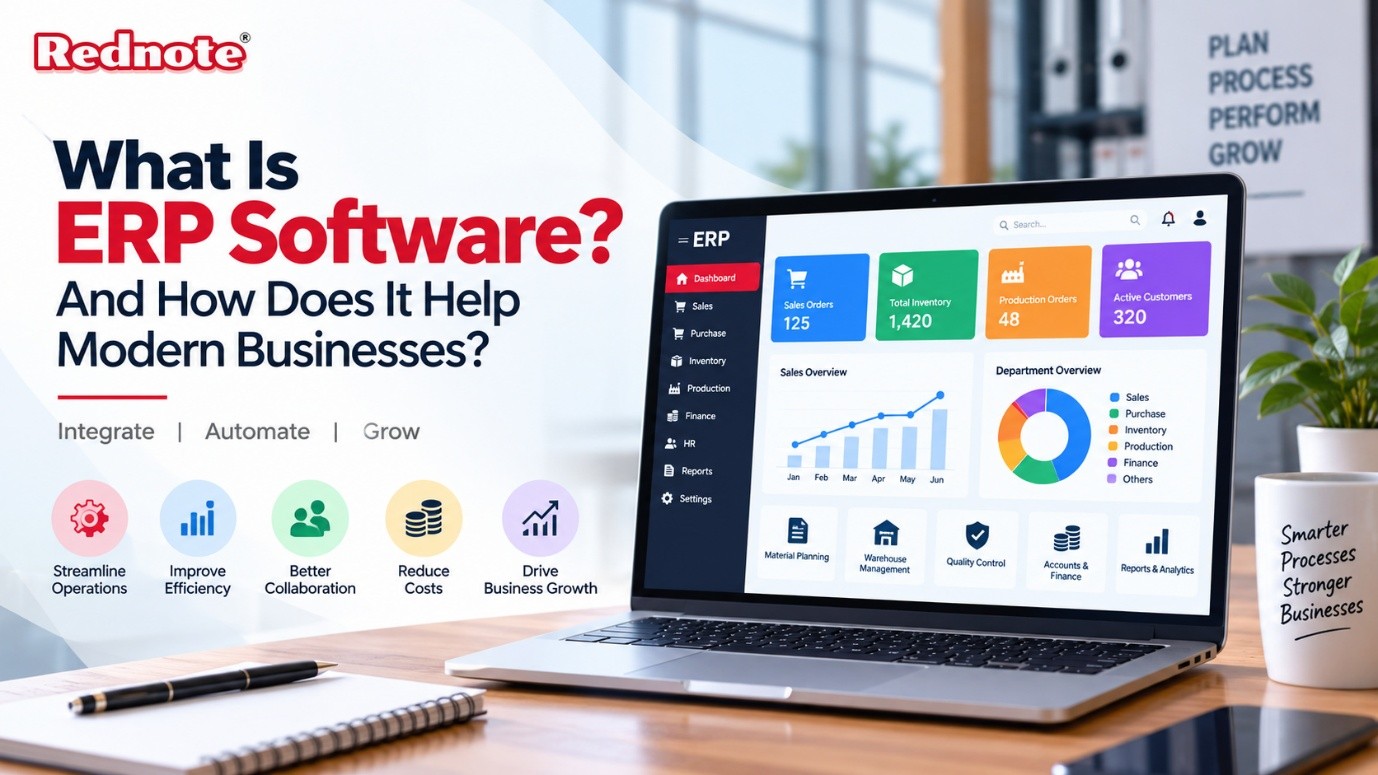
What Is ERP Software and How Does It Help Modern Businesses?
In today’s fast-paced corporate ecosystem, maintaining operational efficiency while scaling up can feel like spinning multiple plates at once. From keeping tight control over shop-floor inventory to processing customer invoices and predicting quarterly revenues, managing different departments with disconnected tools often creates chaotic data silos. This is precisely where a modern ERP software solution steps in to bring structure, control, and absolute clarity to your everyday operations.
By replacing fragmented spreadsheets and disparate software platforms with a single unified workspace, it connects every critical department in real time. Whether you run a growing production line or oversee complex supply chains, adopting a dedicated system helps eliminate operational bottlenecks, reduce costly manual errors, and empower your teams to make smarter, data-driven decisions.
In this deep dive, we will explore what an ERP system actually is, how it transforms business workflows, key capabilities to look for in industrial settings, and why picking the right technology partner is vital for long-term growth.
Understanding the Core: What Is an ERP System?
At its core, Enterprise Resource Planning is a software category designed to centralize and automate business processes across an entire business enterprise. Instead of the sales team using one tool, the warehouse team using another, and the finance team relying on separate offline accounting sheets, an ERP system brings all these operations together into a single, shared database.
When a sales representative enters a new customer order, the system instantly checks warehouse stock levels, generates material requirements, notifies the production supervisor, and updates financial projections automatically. This instant visibility ensures everyone across the company operates using a single source of truth, removing miscommunication and tedious double-entry work.
Modern platforms are available in flexible deployment models, including cloud-based systems for on-the-go access and traditional on-premise installations for tailored infrastructure setups.
Why Modern Businesses Need ERP Systems to Scale
Operating a growing business without an integrated solution often leads to operational friction. As your order volume increases and customer expectations rise, manual management techniques simply fall short. Here is how implementing a robust system transforms modern enterprises:
1. Unified Data and Real-Time Visibility
When business operations grow, managers can no longer afford to wait days for end-of-month manual reports. A connected software solution delivers real-time analytics across procurement, sales, stock levels, and cash flow. Executives can easily monitor critical key performance indicators (KPIs) through clear dashboards, enabling them to spot bottlenecks early and adapt quickly.
2. Workflow Automation and Error Reduction
Manual data entry is slow, repetitive, and vulnerable to human oversight. Automated workflows handle repetitive tasks—such as creating purchase orders, issuing delivery challans, generating invoices, and triggering stock alerts—saving valuable labour hours while maintaining high accuracy across departments.
3. Streamlined Inventory and Warehouse Management
Carrying excess raw materials ties up vital cash, while running out of stock halts shipments and frustrates customers. Advanced platforms give you exact control over multi-warehouse storage down to individual shelf numbers, enabling lot tracking, batch management, and clear visibility into raw materials versus finished goods.
4. Seamless Financial Compliance and Invoicing
Financial health relies on fast, error-free billing and strict regulatory compliance. A well-built system streamlines eInvoicing, eWay bill generation, and automated approval hierarchies. In regions like India, maintaining smooth integration with local tax portals and accounting tools keeps financial records fully compliant without extra hassle.
The Operational Edge: ERP Software for Manufacturing Companies
While generic systems manage basic administration and finance, industrial businesses require deep operational specialized tools. Implementing specialized Manufacturing ERP software gives production managers the visibility and granular control required on the plant floor.
Here is how a tailored setup manages complex factory workflows:
- Bill of Materials (BOM) Management: Define multi-level BOM structures detailing every raw material, sub-assembly, and operational component needed to manufacture a finished product accurately.
- Material Requirement Planning (MRP): Automatically analyze sales demand against existing inventory levels to determine exact purchasing requirements, avoiding material shortages and unnecessary stock purchases.
- Batch and Serial Tracking: Maintain complete forward and backward traceability for raw materials and finished goods, which is essential for audit compliance, batch management, and quality control.
- Production Costing: Calculate precise unit costs by factoring in raw material expenses, direct labour, machinery overheads, and wastage to protect your operating margins.
- Subcontracting Management: Easily manage third-party job work and external processing, tracking outgoing raw materials and incoming processed items with clear inventory reconciliation.
Driving Growth: Why Adapting ERP Software in India Is Essential
The modern industrial landscape in South Asia is experiencing rapid digital growth. Manufacturing units, trading hubs, and service providers across major industrial hubs like Chennai, Bangalore, Mumbai, and Delhi are rapidly modernizing their tech stacks to remain competitive globally.
Adopting ERP software India market tailored solutions offers key advantages to local businesses:
- GST and Regulatory Compliance: Seamlessly generate e-Invoices and e-Way bills directly from your system to align with statutory requirements without needing extra third-party software.
- Local Financial Systems Integration: Easily synchronize sales, purchases, and client ledgers with widely used Indian accounting platforms such as Tally.
- Multi-Unit Operations: Manage multiple factories, regional warehouses, and sales branches across different states from a unified central platform.
- Cost-Effective Scalability: Cloud-based subscription models allow small and medium enterprises (SMEs) to access enterprise-grade functionality without massive upfront infrastructure investments.
Key Features to Look For When Choosing Your ERP
Selecting the Best ERP software requires identifying a platform that fits your specific industry processes rather than forcing your business into a rigid, complex setup.
Here are essential capabilities to check off your list:
- Sales Order to Delivery Tracking: Effortlessly track customer orders from initial lead creation down to delivery challans and final billing.
- Multi-Warehouse & Shelf Location: Detailed tracking across multiple facilities down to individual rack, row, and shelf numbers.
- Custom Approval Hierarchies: Flexible rules and approval structures for purchase orders, discounts, and high-value expense requests.
- Mobile Accessibility: Android and iOS mobile access to check production metrics, approve requests, and monitor stock levels anywhere, anytime.
For businesses seeking a scalable, user-friendly solution, platform providers like Rednote offer tailored ERP solutions built specifically to handle complex inventory, production costing, and multi-warehouse operations effortlessly.
Step-by-Step Implementation Strategy
Implementing a new system is an important strategic project. To ensure a smooth transition, follow this phased implementation approach:
- Requirement Mapping: Identify current operational pain points, map your workflows, and outline your core expectations.
- Data Cleaning & Migration: Organize master data—including item master lists, customer records, vendor details, and opening inventory balances—before importing into the system.
- Configuration & Customization: Set up user role permissions, approval rules, document numbering formats, and custom print layouts.
- User Training & Acceptance: Train shop-floor operators, purchase teams, and accounts personnel to build confidence in using the new system daily.
- Go-Live & Post-Launch Support: Transition to the new platform with vendor support on hand to solve early operational questions quickly.
Evaluating established platforms such as Rednote ensures your implementation receives hands-on technical guidance, smooth software setup, and ongoing support for your team.
Conclusion
Upgrading your organizational infrastructure with modern ERP software is no longer just a technical update—it is a core strategy for sustainable growth. By replacing slow, disconnected tools with an integrated system, businesses gain precise inventory control, automated production workflows, lower operating costs, and real-time operational visibility.
Whether you operate a expanding manufacturing facility or manage multi-location distribution networks, investing in a robust ERP software for manufacturing company ensures your operations stay agile and competitive. Selecting the Best ERP software tailored to your business needs builds a strong foundation for higher productivity, superior quality control, and long-term business success.