What Is HRMS Software and Why Do Businesses Need It?
If you still manage attendance in registers, leave requests on WhatsApp, and salaries in a spreadsheet, you already know how much time it eats up. Every month-end turns into a scramble of corrections, calculations, and follow-ups. This is where HRMS software comes in. It brings all your people-related work into one system, so your team spends less time on paperwork and more time on actual growth.
In this guide, we’ll explain what an HRMS is, what it does, and why businesses of every size, from a 20-person startup to a 2,000-person company, are moving to it.
What Does HRMS Stand For?
HRMS stands for Human Resource Management System. Think of it as a digital home for everything related to your employees: their personal details, attendance, leaves, salary, performance, documents, and exit formalities.
Before such systems existed, each of these tasks lived in a different place. Attendance was in one file, leave balances in another, and salary sheets somewhere else. Mistakes were common, and finding one piece of information could take an hour.
An HRMS connects all of it. When an employee joins, their record is created once. From there, the same data flows into attendance, leave, payroll, and reports without anyone typing it again.
How Is It Different From Basic HR Tools?
Many businesses start with a simple HR software tool that handles one or two tasks, like storing employee records or tracking leaves. That works for a very small team. But as headcount grows, you need more than a digital filing cabinet.
A complete HRMS goes further. It handles the full employee lifecycle, from the day you post a job opening to the day someone submits their resignation. It also gives managers and employees their own logins, so people can apply for leave, download payslips, or update their details without chasing the HR team.
Key Features You Should Expect
Not every system offers the same features, but a good one usually covers these areas:
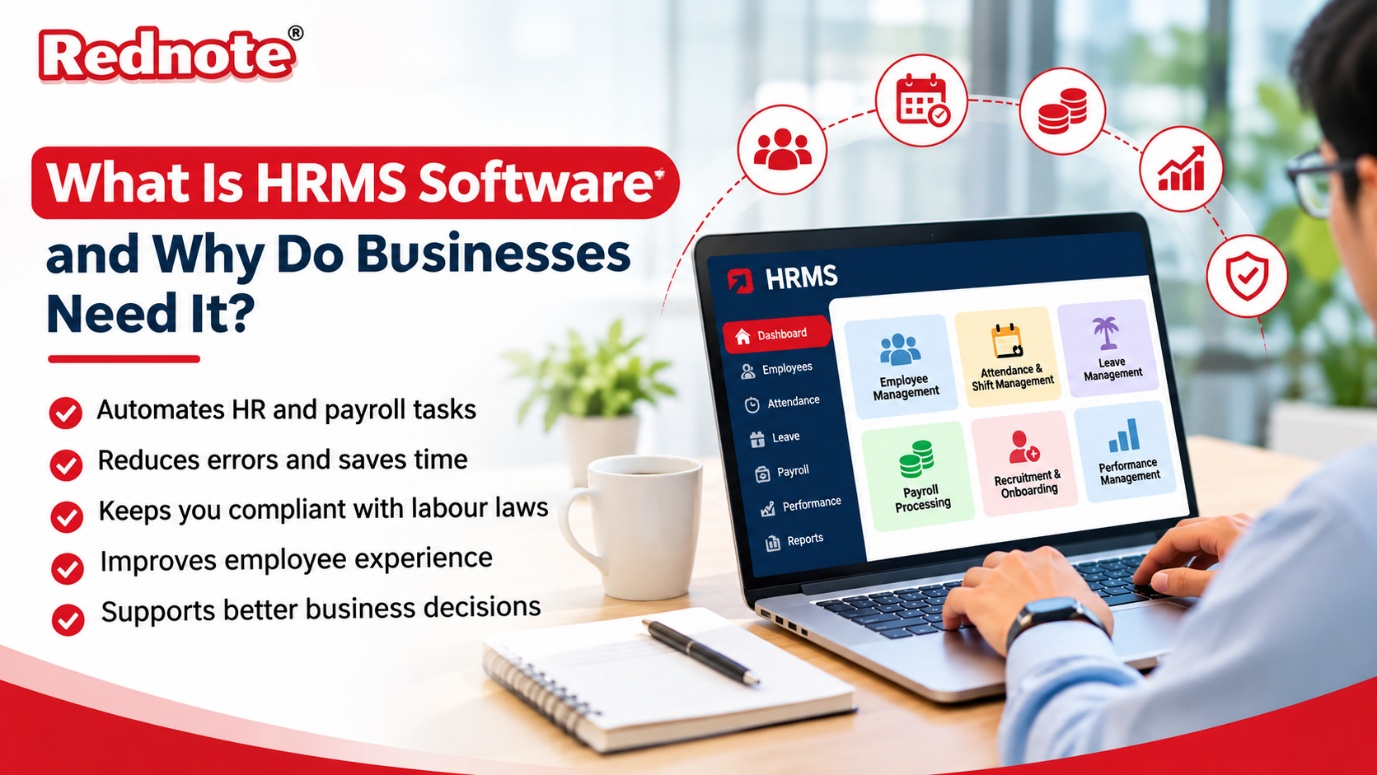
- Employee database. A single, secure place for personal details, contracts, IDs, bank information, and documents. No more hunting through folders.
- Attendance and shift management. Employees can check in through a mobile app, biometric device, or web login. The system tracks late arrivals, overtime, half days, and shift changes automatically.
- Leave management. Employees apply online, managers approve with one click, and balances update on their own. Holiday calendars and leave policies are set once and applied to everyone.
- Recruitment and onboarding. Post jobs, track candidates, schedule interviews, and send offer letters. After someone accepts, the new hire can upload documents and complete formalities before day one.
- Performance management. Set goals, collect feedback, and run review cycles without long email threads.
- Reports and analytics. See attrition trends, attendance patterns, and headcount by department in a few clicks. This helps you make decisions with facts instead of guesses.
Why Payroll Is the Biggest Reason Businesses Switch
Ask any HR manager which task stresses them the most, and many will say salary processing. Calculating pay involves attendance, leaves, overtime, bonuses, loans, and deductions, and one wrong number can upset an employee or create a compliance problem.
Modern payroll software removes most of this pressure. It pulls attendance and leave data directly, applies your salary structure, and calculates the final pay for every employee in minutes. It also generates payslips and bank transfer files without manual work.
For Indian businesses, there is an added layer of statutory requirements. PF, ESI, professional tax, and TDS each have their own rules, rates, and due dates. A good system keeps these updated and prepares the returns for you, which lowers the risk of penalties for late or incorrect filing.
The Power of One Connected System
The real value appears when attendance, leave, and salary are connected. This is why many growing companies choose HR payroll software instead of using separate tools for each task.
Here’s a simple example. An employee takes three days of unpaid leave. In a disconnected setup, someone has to notice it, tell the payroll team, and adjust the salary by hand. In a connected system, the approved leave automatically reduces that month’s pay. There is no extra step and no chance of forgetting.
This connection also removes the usual arguments about “my attendance was marked wrong” because everyone sees the same records in real time.
Why Businesses Need an HRMS
Let’s look at the practical benefits.
It saves a lot of time
HR teams often spend most of their week on repetitive work such as data entry, approvals, and answering the same questions. Automation handles these tasks, so your team can focus on hiring good people, improving culture, and supporting managers.
It reduces errors
Manual calculations and copy-pasting between sheets invite mistakes. An automated system follows the same rules every time, which means fewer corrections and fewer unhappy employees.
It keeps you compliant
Labour laws and tax rules change often. A reliable system updates its rules and reminds you of deadlines, so you are not caught off guard during an audit.
It improves employee experience
People like having control over their own information. Being able to check a payslip, apply for leave, or raise a request from a phone creates trust and saves everyone a conversation.
It supports better decisions
When data is organised, you can spot problems early. If one department has high absenteeism or unusual overtime, you will see it in a report rather than finding out months later.
It grows with you
Adding ten new employees to a spreadsheet is annoying. Adding a hundred is chaos. A proper system handles growth without extra effort, new branches, or new shifts.
Signs Your Business Is Ready for an HRMS
You don’t need to be a large company to benefit. Consider making the switch if:
- Payroll takes more than a day or two every month
- You often find mistakes in salaries after they are paid
- Leave and attendance disputes are common
- Employee files are scattered across emails, folders, and paper
- You have more than one office, shift, or work location
- Your HR team is too busy with admin to do real people work
- You are preparing for audits or want cleaner compliance records
If two or three of these sound familiar, it is likely time.
How to Choose the Right Solution
Before you buy, keep these points in mind:
Ease of use. If your team finds it confusing, they won’t use it. Ask for a demo and try it with real tasks.
Local compliance. Make sure it supports Indian statutory requirements such as PF, ESI, PT, and TDS, along with proper Form 16 and payslip formats.
Mobile access. Employees and managers should be able to do the basics from their phones.
Customisation. Your salary structure, leave policy, and approval flow are unique. The system should adapt to you, not the other way round.
Support and training. A good vendor helps you during setup and answers questions quickly afterwards.
Data security. Employee information is sensitive. Check for encryption, role-based access, and regular backups.
Pricing. Look for clear pricing with no hidden charges for extra users or modules.
If you’d like to see what a complete platform looks like, you can explore the options available on Rednote.in and compare them with your needs.
Common Mistakes to Avoid
A few things often go wrong during adoption. Some businesses skip training, so staff never use the system properly. Others import messy data and carry old errors into the new setup. Clean your records before migration, involve your HR and finance teams from the start, and roll out in stages if you have a large workforce. A short pilot with one department can reveal issues before you go company-wide.
An HRMS is no longer a luxury for big corporations. It is a practical tool that saves time, cuts mistakes, and gives employees a smoother experience from joining to exit. When your people processes run well, everything else, from productivity to retention, tends to improve.
If you are ready to replace spreadsheets and manual follow-ups, start by exploring a reliable HRMS software solution that fits your team size and budget. For more details, you can visit Rednote.in and see how a connected system can simplify your HR operations.